How our Food is cooked The Bawarchi The Cook
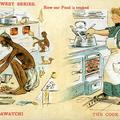
A humorous card by one of the largest Raj retailers, comparing Western and Eastern cooks and procedures. It is signed by the artist Geo[rge] D. and dated [19]11 in the bottom right corner.
A humorous card by one of the largest Raj retailers, comparing Western and Eastern cooks and procedures. It is signed by the artist Geo[rge] D. and dated [19]11 in the bottom right corner.

Nautch dancers inspired stories like Hassan Shah’s The Nautch Girl, “the first known modern Indian novel” in the 1790s, as well as the first Urdu novel, the story of the Lucknow courtesan Umrao Jaan Ada in 1899.
A version of this card was sent by
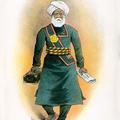
Hobson-Jobson's, the famous dictionary of Anglo-Indian terms, defines Chuprassy as "the bearer of a chapras, i.e. a badge-plate inscribed with the name of the office to which the bearer is attached. The chaprasi is an office-messenger, or henchman,

Another F. Perlberg signed postcard. Murrays A Handbook for Travellers in India Burma and Ceylon (1938) writes of this view "On the W.[est] side of Dalhousie Square is the large domed building of the General Post Office, occupying part of the site of
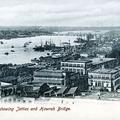
In The River showing Jetties and Howrah Bridge. Calcutta ships from all over the world are docked on the Hooghly, next to 18th and 19th century mansions occupied by successful trading houses. Thomas Cook & Sons wrote in their 1911 India, Burma, and
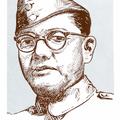
Subhas Chandra Bose, also known as Netaji, was one of the most famous leaders of the Indian freedom struggle.
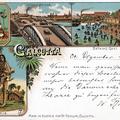
A fourth card in Rossler’s 1897 lithographic series of Calcutta features a fakir, the male counterpoint to the nautch dancer. Above the fakir is his spiritual guide along lifelong wanderings, Lord Shiva.
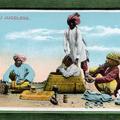
Although the origin of the word juggler as "one skilled in keeping several objects in motion in the air at the same time by alternately tossing and catching them" goes back to the 14th century and seems to stem from the Middle English "jogelour

The Writer's Building in Kolkata was where India was governed from the late 1700s until 1857. "Writers" were recruits who came from England to make their fortunes with the British East India Company; some became fabulously wealthy "nabobs," although
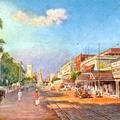
One of six cards in one of the first series of Tuck's India postcards.
[Original caption] Old Court House Street, Calcutta.
