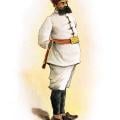
The Indian Councils Act of 1861 was the foundation for the Indian Police Service, one whose fine exemplars was this Calcutta Policeman, which the emblem on his belt so proudly proclaims.
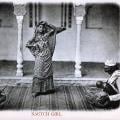
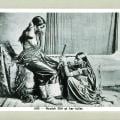
The role of nautch or "dancing" girl was changing at the time of this postcard. S.S. Bose, a collector of early nautch photographs, opined in the Kolkata Englishman in 1903 that Christian and Indian “moralists,” have nothing to say about the new…
Fort William in Calcutta, completed in 1781, is a remnant British colonial rule.
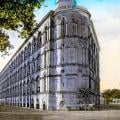
Dalhousie Barrack, a four-storey building, is a captivating component of Fort William. Today it is the Military Head quarters of the Eastern Command of Indian Army.
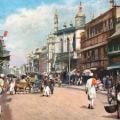
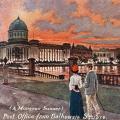
Another painted postcard by the Anglo-Indian artist Frank Clinger Scallan (1870-1950) whose Kolkata series of nearly a dozen postcards reflects the pleasures of life in what was British India's largest metropolis.
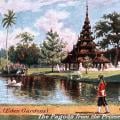
A vibrant painted postcard by the Anglo-Indian artist Frank Clinger Scallan (1870-1950), part of a series he made illustrating the city he spent much of his life in.
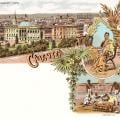
Among the earliest known postcards of Kolkata, by a local and likely Austrian,photographer. Note the four tiny titles below each vignette for those eager to know.
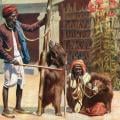
[Original caption] Performing Bears, Calcutta. It is a common occurrence in Calcutta and other cities of India to meet the native from the hills leading a small bear that is found in the Himalayas and other mountain districts.