Sent to R.S. Gibbons, c/o Mrs. N.L. Larler, J.G. Northhampton Road, Addiscombe, Croydon, Surrey, England: "Feb 4th [1919?]. Granny sent you 10/- [shillings] for Xmas. Ask R.M. to give it to you out of the Bank.
Sepia cards were printed in a brown colour instead of black inks on halftone, collotype and real photo postcards. They went in and out of fashion from 1900 through the 1940s.
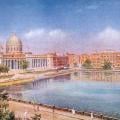
[Original caption] Dalhousie Square. On the front of the huge Post Office in this Square is a slab marking the site of the "Black Hole" tragedy, when 148 English people were forced into a small guard-room with only two small windows in the heat of…
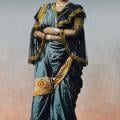
The former Angelina Yeoward (1873-1930) became one of the most famous singers in India, and one of its first gramophone-recorded artists. Her records were among the most popular between 1910 and 1920.
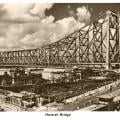
The Howrah Bridge was constructed between 1936 and 1942. It replaced the Floating Pontoon Bridge that connected Howrah and Kolkata (then Calcutta). The Howrah Bridge was opened to public in February 1943.
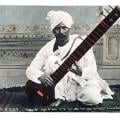
A hand-tinted studio postcard using what seem like only three carefully deployed colors - red, green and a hint of yellow or cream on the balustrade. The artistry is in getting the sitar bridges almost right.
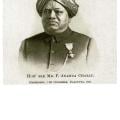
Much of the initial Independence struggle was peaceful, led by often hardly remembered Anglicized lawyers like Mr. P. Ananda Charlu, President of the 7th Congress meeting held in Calcutta in 1891, barely 6 years after the party was founded by the…
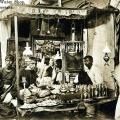
A postcard that reflects how easily Kolkata mixed past and present at the turn of the century. Paan is an ancient cornucopia of spices and nuts wrapped in a betel leaf. Next to it are cooling soda bottles.
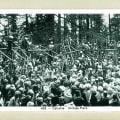
An unusually lively postcard with what seem to be wooden full circle swings or spinners common at amusement fairs. What exactly the Shibjee Fare [Fair] was is unclear.