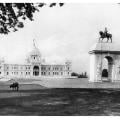
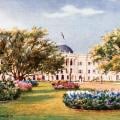
The Victoria Memorial of Kolkata was constructed between 1906 and 1921. Note the fine juxtaposition of the cow grazing and the statue of the horse being ridden by Edward VII above the gateway.
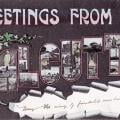
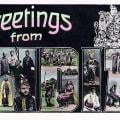
An early composite postcard, made up of 27 separate images stuffed into the outline of the letters. They are actually postcards; if one looks carefully the image on top of the second "T" is actually of dancers with the postcard title "Dancing Girls…
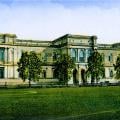
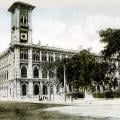
It is hard to overestimate the importance of the telegraph, introduced in 1840 to the Raj, as this grand edifice dedicated to the new medium and constructed in the 1870s suggests.
A "Greetings from India" postcard composed of many images, each of which were also separate postcards, within stenciled letters. On the back the owner wrote "What do you think of the square tacks?"
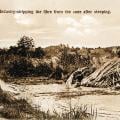
"Another sign of the transition from the wet to the dry season was to be seen in the immense number of jute-stem stacks standing on every field and lawn," wrote Nirad Chaudhry in his Autobiography of an Unknown Indian.
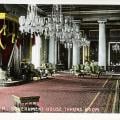
One of the major settings in Raj history, and one of the few interiors shown in postcards. The former Government House in Kolkata is now the Raj Bhavan, the offical residence of the Governor of West Bengal.
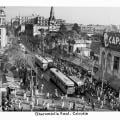
Dharmatala (Dharumtalla) Road, now Lenin Sarani in central Kolkata, is one of the busiest thoroughfares in Kolkata. Its original name means "holy street."
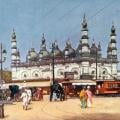
[Original caption] Dhurmtollah Musjid. One of the busiest localities of Calcutta. It is noticeable that in Dhurmtollah Lane, the names on the shops and offices are all native names while close by in Dhurmtollah Street they are chiefly European.