Phatani Begging Woman
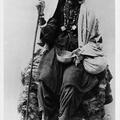
Women are often shown as dancers, rarely this elderly as beggars on postcards. This photograph was likely taken in a studio, with the woman sitting on a stone which might be covered with animal skins.
Women are often shown as dancers, rarely this elderly as beggars on postcards. This photograph was likely taken in a studio, with the woman sitting on a stone which might be covered with animal skins.
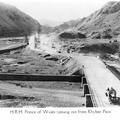
A rare visit by the Prince of Wales to the edges of Empire; note the car in the foreground and mid-ground. Edward VIII later gained notoriety for abdicating in 1936 after choosing to marry a divorced America woman, Wallis Simpson.
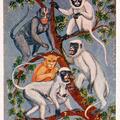
"It was curious, for example, to hear us spoken of as ‘the Monkey People’," wrote longtime Punjab I.C.S. Officer Sir Malcolm Darling in his memoir. He continued:
"Nor was it altogether palatable to be told by a highly educated Brahmin—‘you (that is,
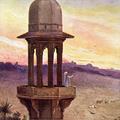
Although not signed, this may have been from a painting or drawing by Evelyn Stuart Hardy (1865?-1935) who illustrated a number of other "Child Life" series postcards for A. B. Shaw, a London printer and publisher.
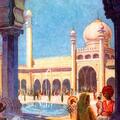
The British Empire Exhibition in 1924 was promoted with many a series of postcards by British publishers, including a series by the artist Ernest Coffin, of which this though unsigned seems to be an example.
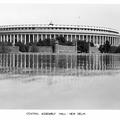
One owner of this card, not postmarked, wrote on the back: "Parliament Building, New Delhi cribbed from the Colosseum at Rome."
The photograph was probably taken soon after is was opened in January 1927 to serve the Imperial Legislative Council.
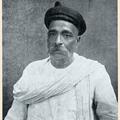
Few if any politicians were as popular as Bal Gangadhar Tilak, the Maharashtrian politician and freedom fighter who spent many years in jail. He was referred to by British authorities as "the father of Indian unrest."
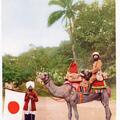
It was not just European and American tourists who came to India; this unusual postcard shows a Japanese traveler on a camel with the guide helpfully holding up a Japanese flag. The camel bags still have English names on them though.
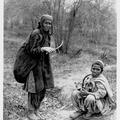
Mela Ram was a photographer who might have warmly welcomed the advent of the real-photograph as a way for his art to take precedence over the vagaries of publishing in collotype or halftone using hand-tinted color to enhance images (there are few
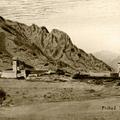
This image probably dates from the 1890s and was made by William Darcia Holmes, the father of Randolph Holmes who published these postcards from their Peshawar studio.
