[Indian Cavalry]
![[Indian Cavalry]](https://www.paperjewels.org/sites/default/files/styles/square_thumbnail/public/slides/india-army_0.jpg?itok=7evw3Eiy "[Indian Cavalry]")
An early advertising card for the West End Watch Co. in Bombay (373 Hornby Road) and Calcutta (14 Dalhousie Square), produced by a famous Swiss printing house.
An early advertising card for the West End Watch Co. in Bombay (373 Hornby Road) and Calcutta (14 Dalhousie Square), produced by a famous Swiss printing house.
![Paschendaele Nov. 1914 Cavaliere indienne [Indian Cavalry]](https://www.paperjewels.org/sites/default/files/styles/square_thumbnail/public/slides/indian-soldier_0.jpg?itok=NaOCI3g- "Paschendaele Nov. 1914 Cavaliere indienne [Indian Cavalry]")
This postcard by the French artist Emile Dupuis honoured the Indian soldiers who fought with the Allies in in what is better known as the First Battle of Ypres in Belgium, an early World War I battleground where some 160,000 German soldiers died.
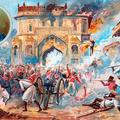
The back of this advertising card for "Price's 'Lighting Tapers,' for lighting candles, gas, &c, White or coloured, in various thicknesses, and 12 or 22 inches long," provides this caption about what is also known as the First War of Independence or
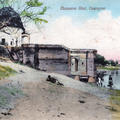
On the back of this card, showing one of the most memorable places to colonial residents from the Uprising of 1857, its significance is explained in this handwritten message: "“Dear Lill, This is the place where “During the Mutiny” the Women and
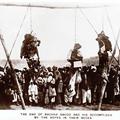
This postcard shows the so-called "Bandit King" of Afghanistan, Habibullah Kalkani – "Bachha Sakoo," the son of a water-carrier – who led a successful revolt against King Amanullah of Afghanistan in January 1929. He ruled briefly until the British

Perhaps no image was more common in 19th century British albums from India than the Memorial Well at Cawnpore [Kanpur]. It was a tribute to the women and children apparently executed in unclear circumstances by rebellious Indian soldiers under the
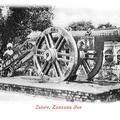
The gun in front of Lahore Museum that was made famous in Rudyard Kipling's novel Kim which begins "He sat, in defiance of municipal orders, astride the gun Zam-Zammah on her brick platform opposite the old Aijab Ghar–the Wonder House, as the natives
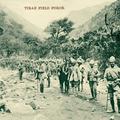
The original image this postcard is based on was very popular and shows General Lockhardt on June 4, 1897 in the Arhanga Pass above Swat Valley in the then North West Frontier Province (NWFP, now Khyber Pakhtunkhwa). It commemorated a British victory
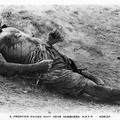
This kind of postcard, showing the corpses of "raiders" who were said to have come to settled and cantonment areas in search of loot and were often also called "loosewalas" are found only in significant numbers in what was the former North West
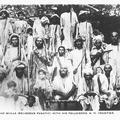
Religious groups in opposition to the British found refuge in tribal areas bordering Afghanistan throughout the colonial period
The British fought a nearly continuous series of campaigns against various tribes and groups led by Muslim religious
