Greetings from India
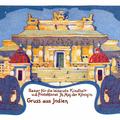
This early postcard was published by the "Bazaar for the Suffering Child," a missionary group in Germany for domestic consumption and draws our attention to two features of early European postcards.
This early postcard was published by the "Bazaar for the Suffering Child," a missionary group in Germany for domestic consumption and draws our attention to two features of early European postcards.
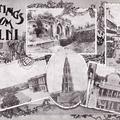
An early Greetings from Delhi postcard that seems to have been constructed from a number of other postcards given the way the titles appear on the images.
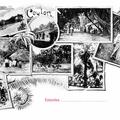
A later "Greetings from" postcard where the divided back, allowing people to write messages on the back of cards in addition to the address, allowed the publisher to put many more photographs of the place on the front.
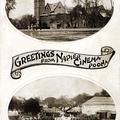
An interesting postcard from many angles. It is an early advertising card for a cinema in Pune, part of a series published by the proprietor A.C.

Kalighat - Burning Ghat - Nautch Girl - Kali
One of the earliest "Greetings from Calcutta" postcards, by the German or Austrian photographer Werner Roessler who was based in the city and had the lithographic card printed in Austria from his
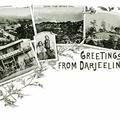
One can only marvel at the early "Greetings from" postcard, the way five photographs are woven into one image with the help of plant motifs, in this case tree branches but often palm trees for Indian images.
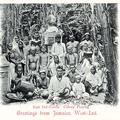
A postcard showing Indian workers ("east Indian coolies") brought to work in Jamaica (the "West Indies") to work, part of an enormous migration of Indian labor to British colonies around the world, many of whose descendants are still living in places
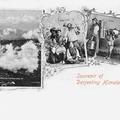
Thomas Paar was one of the earliest publishers of Darjeeling postcards, and a longtime photographer with a grand studio in the middle of the hillstation.
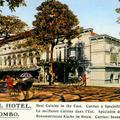
Hotel advertising postcards played an important role in the rise of the medium; they are often found in guest rooms today too, ready to send home and market the establishment where a loved one is staying.
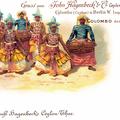
[Original German translated] Buy tea from Hagenbeck's Ceylon Tea.
The main driver of Sri Lanka’s economic growth during the colonial period was the tea industry.
