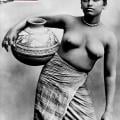
Plate & Co., like many Ceylon-based firms, published semi-nude postcards of women, more common here than even in South India, including this card with a nicely placed purple stamp.
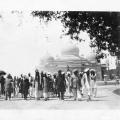
Sandeman Memorial Hall in the background was built expressly to bring together Balochistan's various tribal leaders to negotiate and settle disputes between themselves and the British Indian government.
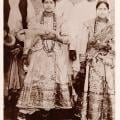
Every city had its female dancers, or "nautch women" and they were often showed with the musicians who played, assisted and sometimes protected and managed them as well.
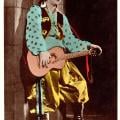
Dinshaw Billimoria (1904-1942) was one of India's most famous silent film actors, and became best known for his success in R. S. Choudhury's Anarkali (1928).
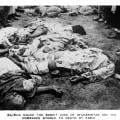
Contemporary accounts of how Hamid Kalkani died are unclear. Nadir Khan is said to have chased him to his village in October 1929 where he was stoned to death by residents which this postcard may show.
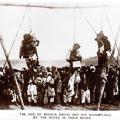
This postcard shows the so-called "Bandit King" of Afghanistan, Habibullah Kalkani – "Bachha Sakoo," the son of a water-carrier – who led a successful revolt against King Amanullah of Afghanistan in January 1929.
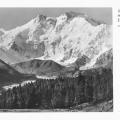
Signed in print by the expedition's leader, Willy Merkl. The cancellation on the back, on January 17, 1932 is from “Munchen, Hauptstadt der Bewegung” by which is meant Munich’s role in the origins of the Nazi movement during the Beer Putsch in 1923.
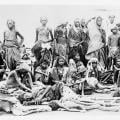
Major Indian famines were caused by droughts and poor food distribution policies. Though uneven rainfall was a major cause of Indian famines in the 19th century, faulty administrative and economic policies were equally responsible.
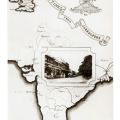
An understated, nicely designed "Greetings from" postcard from the cantonment in Jubbulpur in the Central Indian state of Madhya Pradesh. The insignia suggests it was published for or celebrated the Royal Field Artillery (RFA) then based here.