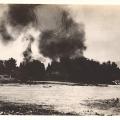
Sometimes postcards were journalism, in this case a real-time view of the deadliest earthquake in British India, which killed somewhere between 30,000 and 60,000 people in the capital of Balochistan on May 23, 1935.
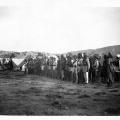
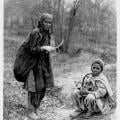
This unusual real photo postcard seems to show recruiting in Jhelum, a key Punjabi district where British Indian soldiers were signed up for service in World War I.
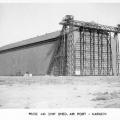
Known locally as the "Kala Chapra" or "Black Shed," this enormous structure constructed in the late 1920s was considered one of the largest structures in the British Empire.
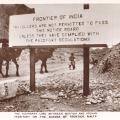
A nicely composed view of one of the most popular postcards from what was British India's Northwest Frontier Province (NWFP), now known as Khyper Pakhtunkhwa (KPK).
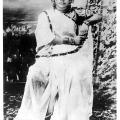
"Hindustani girls" was used to refer to women from "Hindustan," or the broad belt across northern India east of Punjab known as U.P., then "United Provinces" and now "Uttar Pradesh." It would have been a term appropriate to a Peshawar based…
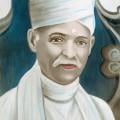
Madan Mohan Malaviya (1861-1946) was an Indian politician, notable for his role in the freedom struggle and his efforts to eliminate the caste system, as well as co-founding Banaras Hindu University in 1916.
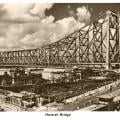
The Howrah Bridge was constructed between 1936 and 1942. It replaced the Floating Pontoon Bridge that connected Howrah and Kolkata (then Calcutta). The Howrah Bridge was opened to public in February 1943.
Mela Ram was a photographer who might have warmly welcomed the advent of the real-photograph as a way for his art to take precedence over the vagaries of publishing in collotype or halftone using hand-tinted color to enhance images (there are few…
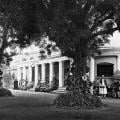
Hotel Cecil was one of the most famous European-owned hotels in Delhi and stood on an 11 acre park in Rajniwas Marg in Delhi's Civil Lines area. There were more than hundred rooms, a swimming pool and lush green lawns.