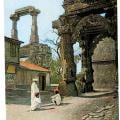
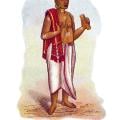
The Rudra Mahalaya Temple at Siddhpur was conceived and constructed as a tribute to Mahadev, by the first Solanki king of Gujarat, Mulraj (942-996 ACE).
Lord Curzon (1859-1925) served as the Viceroy of India for six years (1899-1905). His wife Mary Curzon, also shown in the juhla, wrote in her diaries about one incident that stayed with her from the Hyderabad tour in 1902: “Captain Wigram fired as…
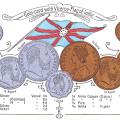
An early postcard summarizing the value of British Indian coinage, one rupee and below, in silver and copper. One British pound at the time was worth 240 pence, with 1 Rupee worth 16 pence (the 'd' on the card).
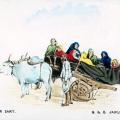
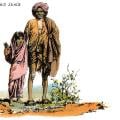
A very early lithographic postcard by Gobindram Oodeyram that seems to have been printed in India. A compelling glimpse of the rural poor in the sprawling state of Rajasthan during what were trying times.
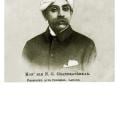
Sir Narayan Ganesh Chandavarkar, an early Hindu reformer and political leader, was born in Karnataka in 1855. He later became vice-chancellor of the University of Bombay where he spent most of his life working as a Justice, activist and reformer.
Taraporevala & Sons was the premiere Bombay bookstore and publisher, stock full of 19th century illustrated magazines and images eagerly bought and saved in trunks by artists like Ravi Varma as inspiration.
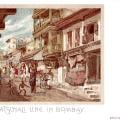
Handwritten on the back is this message: "Bombay, March 3, 1903: “Dear little General. This is a picture of the native portion of this city – we do not dare go in it because there are so many cases of plague.
A very early postcard printed in India and signed by the Ravi Varma Press chief lithographer and also painter, Paul Gerhardt. The title "Bakshis[h] Saheb" refers to the call for alms made by beggars.