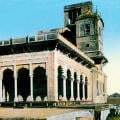
Built in the early 1630s by the Emperor Shah Jehan, the "Palace of Mirrors" or "Crystal Palace" in Lahore Fort is full of glass tiles that reflect light. A UNESCO World Heritage site, the roof was only recently properly restored.
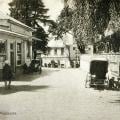
Postcards of retail establishments that are titled as such are not common. Arthur Emmer at "Oxford House" in Meerut were and dealt in many things from a close reading of the two signboards on this postcard: Cabinetmakers, Upholsterers, Storers…
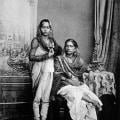
Professional dancing girls were among the most popular early postcard subjects. These two dancing girls are probably from Lucknow as the painting in the studio background on the left recalls the Chutter Manzil in Lucknow.
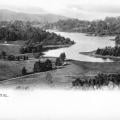
"Kodaikanal (Kody), though not so quite fashionable as Ooty," wrote Eustace Reynolds Hall in The Tourist's India (1907) "is rapidly coming into favour.
Clifton's later postcards, especially his candid photographs in the bazaars of Mussoorie, are among his most interesting. There is a blur to man on the right, suggesting this came from a longer-exposure albumen photograph.
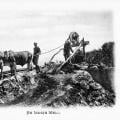
A less-typical image of an "Indian well," with a rugged sloping foreground that reminds the viewer how far beneath water could lie and the messiness of its extraction.
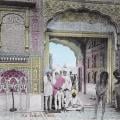
Although it is a single fakir at the doorway who is the subject of the postcard's title, it is the colors of the entrance to the Golden Temple in Amritsar that catch our eye.