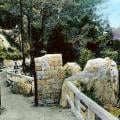
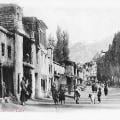
Postcards celebrated infrastructure that made a real difference to residents, in this case a water pipeline critical to the growth and population of the Punjabi hillstation of Murree in the early 20th century.
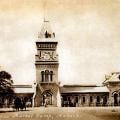
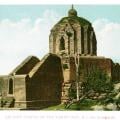
Jadu Kissen’s Archaeological Photographic Works of India, Cashmere Gate, Delhi, was originally archaeological photographer to the Government of Punjab, had an office in Simla (1912), and published many archaeologically-themed postcards.
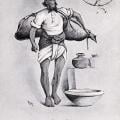
A contemporary artist's rendering of one of the most popular postcard subjects, the all important "bhistie" who brought water in an animal skin to the thirsty.
Probably one of the earliest if not the earliest postcard of Leh, capital of the former Kingdom of Ladakh. Little is known about R. E. Shorter, a photographer with offices in Sialkot, Punjab, on the route to Kashmir, and Kashmir.
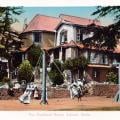
Founded in 1866, this school was founded in 1866 and soon took over this former home of a Viceroy. It remains a premiere educational institution in India, and has grown to serving almost a thousand students from a few dozen in the early days.
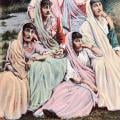
One of the most popular early postcards of Parsees was this arresting composite portrait by Clifton & Co. The original albumen likely dates to the late 1890s.
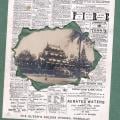
A unique postcard, I know of no other example. A January 26, 1905 front page of the Rangoon Gazette newspaper - itself a source of much interesting information - is fractured with an embossed image of a key landmark in what was then a British…
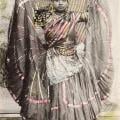
This woman, apparently called Nani, appeared on numerous postcards published by the firm, including an identical one to the above called Girl dancing like Peacock.
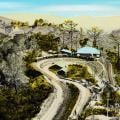
One of the most common postcards from the Darjeeling area. The double loop offers a magnificent view of Darjeeling and Mount Everest. The toy train of Darjeeling is a major draw for tourists and connects Darjeeling to Siliguri in North Bengal.