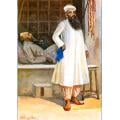
Bohras are Gujarati Muslims known as a business and trading community; they flourished in Bombay during the late 19th century and Karachi since Partition for example.
It can be difficult to date Tuck's postcards because their numbering system – series that included India cards went from about 600 to almost 10,000 – was note entirely chronological.
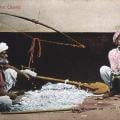
Cotton cultivation in the ancient world may have originated in India 6,000 years ago. Although India's cotton sector declined during the late 18th and early 19th century, during the American Civil War in the 1860s it grew enormously to replace the…
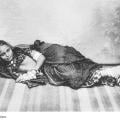
This image of a reclining woman was one of the most popular postcards by the leading early Jaipur photographer and postcard publisher, Gobindram Oodeyram, and was also printed with the title Sleeping Hindu Woman.
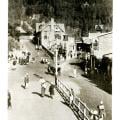
Were Indians allowed on the Mall in Shimla? This view seems to have gained some currency - Anita Desai writes, for example, that "Indians were not so much as allowed to walk on the Mall but were expected to keep to the footpaths on the hillsides" in…
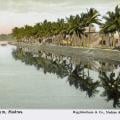
A view of the shortest river (76 miles) to empty into the Bay of Bengal, and a long-critical artery for Chennai, at a time when it was much less polluted than today.
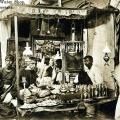
A postcard that reflects how easily Kolkata mixed past and present at the turn of the century. Paan is an ancient cornucopia of spices and nuts wrapped in a betel leaf. Next to it are cooling soda bottles.
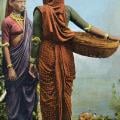
A rather unusual portrait of "coolie" women. While popular postcard subjects, often shown with their baskets, this studio portrait features one woman with her back to the viewer, and another looking straight into her (invisible) eyes.