Springtime on Jakko, Simla
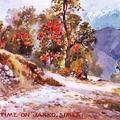
Almost invisible in this painted scene are the two men near the center, half-hidden markers of scale, secret rewards for the perceptive postcard viewer.
Almost invisible in this painted scene are the two men near the center, half-hidden markers of scale, secret rewards for the perceptive postcard viewer.
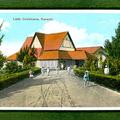
According to Hobson-Jobson, the word gymkhana "is quite modern, and was unknown 40 years ago. The first use that we can trace is (on the authority of Major John Trotter) at Rūrkī in 1861, when a gymkhana was instituted there.
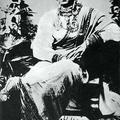
The Urdu text and number suggests that this postcard was made from what was originally a carte-des-visite. Joachim Bautze in his essay Umrao Jan Ada: Her carte-de-visite describes how this form of identification on images was a common practice among

The significance of Buddhism in Burma [Myanmar] reflected in a landscape dotted with pagodas. Shwegyin is close to the Indian border on the western side of Myanmar.
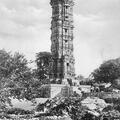
[Original caption continues] Marks the Victory Over the Musalmans. [end]
The original Chittorgarh tower, or Vijay Stambh was constructed in the 16th century to commemorate a victory by the Rajput Maharana Kumbha over the Malwa ruler, Mohamed Khilji
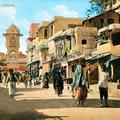
A less common, fairly casual, finely hand-tinted street scene in a then smaller city.
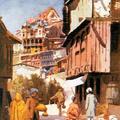
A painted postcard of Simla, published by the local branch of one of the Raj's major retailers based in Kolkata.
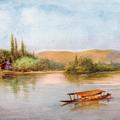
Dal Lake in Srinagar in an artist painted postcard. Dal Lake is connected to a number of other lakes in Kashmir Valley and is well known for its shikaras or house boats.
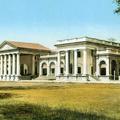
Benjamin J. Cohen, in his recent book In the Club Associational Life in Colonial South Asia (2015, p. 69) quotes Kipling writing of his life around 1879 at the Punjab Club: "'This was the setting in which my world revolved.
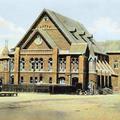
The old Town Hall once housed Shimla's municipal offices, library and Gaiety Theatre.
