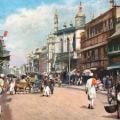
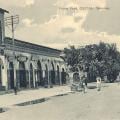
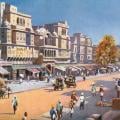
One of the nice things about early postcards like this one of the main street (now known as Jinnah Road) in Quetta, Balochistan are the businesses and names that they reveal.
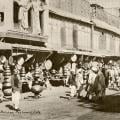
[Original caption] The Bara Bazaar, Bombay (city). The Bara Bazaar is one of the busiest spots in the city of Bombay, and is as substantial in its industries as it is in appearance.
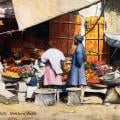
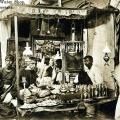
[Original caption] Indian fruit is varied and luscious. Among the most popular are melons, guavas, bananas and mangoes. These, and others, are readily bought, and the fruit stall is a flourishing institution in every Indian bazaar. [end]
"Peshawar City was important in Graeco-Buddhist times and its coppersmiths' bazaar must have started then," wrote Randolph Holmes, proprietor of the studio which published this postcard in a later memoir, Between the Indus and Ganges Rivers.
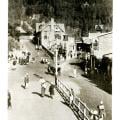
Were Indians allowed on the Mall in Shimla? This view seems to have gained some currency - Anita Desai writes, for example, that "Indians were not so much as allowed to walk on the Mall but were expected to keep to the footpaths on the hillsides" in…
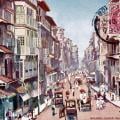
[Original caption] Johari bazaar. The Johari bazaar is one of the most important thoroughfares in Jeypore, and a great market for all sorts of merchandise.
A postcard that reflects how easily Kolkata mixed past and present at the turn of the century. Paan is an ancient cornucopia of spices and nuts wrapped in a betel leaf. Next to it are cooling soda bottles.
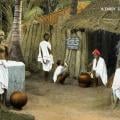
"In India, the toddy shop may well be called ‘The Poor Man’s Club’," wrote Mahatma Gandhi in Harijan (1928),"the well- to-do folks have Willingdon Clubs and Gymkhanas of diverse description, to fulfil their instinct of sociability and to give them…