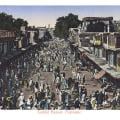
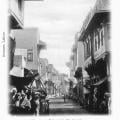
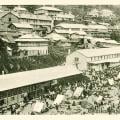
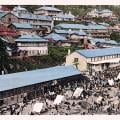
The central bazaar in Peshawar, capital of the North West Frontier Province (NWFP, now KPK) was a common postcard subject, even for distant publishers like H.A. Mirza in Delhi.
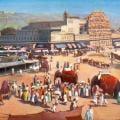
[Original caption] The Chowk and Howa Mahal. This is a picturesque and animated scene. The inhabitants of Jeypore are a busy people, and their bazaars are generally crowded.
Bourne & Shepherd are said to have begun their photographic activities in 1840, a year after the invention of photography (see Macmillan, Seaports of India and Ceylon, 1928, p. 144, probably due to activities of Charles Shepherd).
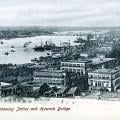
In The River showing Jetties and Howrah Bridge. Calcutta ships from all over the world are docked on the Hooghly, next to 18th and 19th century mansions occupied by successful trading houses.
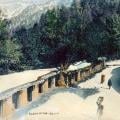
Snow blankets Barian, a town near Murree hillstation in the Punjab. Baljee was an army photographer based in Murree whose large albumen prints (note the title in the negative at the bottom left) were published as coloured collotype postcards.
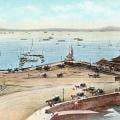
The pier across the Taj Hotel where the Gateway to India now stands. This area was expanded with a sea wall and entry steps before the Gateway to India was completed in 1924. The Japanese-style pavilion seen here was removed.
Bremner was among the very earliest postcard publishers of SIndh, and included a handful of views of Sukkur, a town not often photographed by colonial residents.
Postcards of Darjeeling's bazaar were very common, perhaps because of the excitement at the visual engagement of people coming with their goods from nearby villages and offering them to the hillstation's residents and tourists.