A Brahmin Astrologer
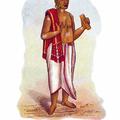
Taraporevala & Sons was the premiere Bombay bookstore and publisher, stock full of 19th century illustrated magazines and images eagerly bought and saved in trunks by artists like Ravi Varma as inspiration.
Taraporevala & Sons was the premiere Bombay bookstore and publisher, stock full of 19th century illustrated magazines and images eagerly bought and saved in trunks by artists like Ravi Varma as inspiration.
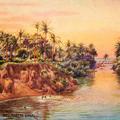
[Original caption] Wellawatta Canal. The length of the island of Colombo is 270 miles, its width 140 miles, an area about four-fifths the size of Ireland.
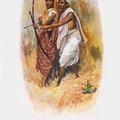
Bhils are a name for ancient tribes across a wide swathe of India, including Gujarat, Madhya Pradesh, Maharashtra, and Rajasthan as well as in parts of far-eastern India. Although Hobson-Jobson claimed that "no distinct Bhil language survives" (p.
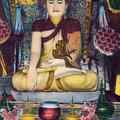
A superbly coloured postcard by D.A. Ahuja. It has probably been coloured with stencils given the inaccuracy around some of the edges, but the colours also seem well woven into the card so could have been part of the German printer's process.

Mortimer Menpes versatility as an artist in command of color and line is manifest in a 12 card series he did for Tuck's. Menpes was one of the few signed India postcard artists to supply more than one publisher.
[Original caption] A Street Scene,
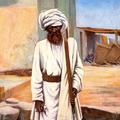
[Original caption] The Afridis are an Afghan or Pathan people, numbering about 300,000 inhabiting the mountaneous region south of the Hindu-Kush. They consist of a number of separate clans, often at feud with each other.
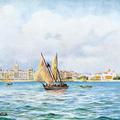
[Original caption] Bombay from Harbour. Bombay is without doubt a prosperous city. The houses are large, hand some and well built–the gardens well laid out and cared for, while the streets are clean and orderly.
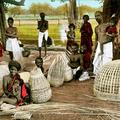
The basket bazaar of Madras was renowned for its beautiful wicker work and offered many kinds of basket weavers a platform to show their craft and sell a wide variety of goods.
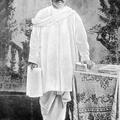
Also known as Lokmanya ("accepted by the people as their leader") Tilak, this Maharashtran was one of the first leaders of the Independence Movement, and someone who used the plague and other injustices of British rule to rally people around the cry
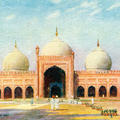
An embossed postcard one of Lahore's most important tourist destinations, shown here before the mosque was renovated in the 1940s. Tuck's only embossed a limited selection of its cards, usually its more beautiful ones.
