The Ruling Princes of India
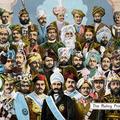
A collage which would have been assembled from a variety of photographs, not a single sitting. In the bottom center with the black jacket is the Nawab of Hyderabad, the richest of them all.
A collage which would have been assembled from a variety of photographs, not a single sitting. In the bottom center with the black jacket is the Nawab of Hyderabad, the richest of them all.
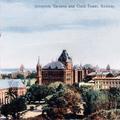
An early view of Bombay by one of its preeminent early postcard publishers. It shows the Rajabai Tower, completed in 1878 on the grounds of the University of Mumbai.
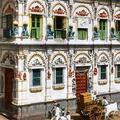
One of the most famous temples in Mumbai, Dwarkadhish Temple, built in 1875, was often referred to as the Monkey Temple because of the figures of monkeys eating bananas on the front.
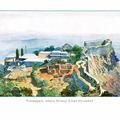
A rare landscape postcard by Dhurandhar, who is best known for his portraits of Bombay types.
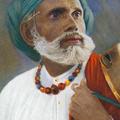
The term mendicant refers to begging or relying on charitable donations, and is most widely used for religious followers or ascetics who rely on charity to survive. Plate & Co.
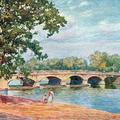
[Original caption] Numgumbakum Bridge.
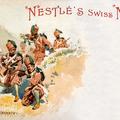
Nestle, founded in 1867, claims on its website that its relationship with India started in 1912. Cards like this from approximately 1900 are evidence that the roots of this relationship extend back earlier.
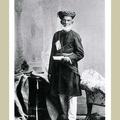
The word "peon" owes its origin to the Spanish word which means laborer.
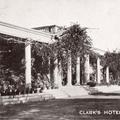
Clark's Hotel seems to have used postcard effectively to promote itself at the turn of the century.
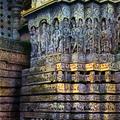
[Original caption] Dreams in Stone, Temple of Halebid, Mysore State. Two most remarkable temples are here, the smaller of the two, star-shaped with 16-points, had a porch that from base to top was carved with sculptures of the best Indian art.
