Aligators at Maghar Pir, Karachi
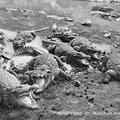
Few Karachiites today would believe that a very popular early postcard of the city showed the Alligators at Mughar Pier, Karachi.
Few Karachiites today would believe that a very popular early postcard of the city showed the Alligators at Mughar Pier, Karachi.
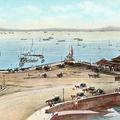
The pier across the Taj Hotel where the Gateway to India now stands. This area was expanded with a sea wall and entry steps before the Gateway to India was completed in 1924. The Japanese-style pavilion seen here was removed.
![[Indian Cavalry]](https://www.paperjewels.org/sites/default/files/styles/square_thumbnail/public/slides/india-army_0.jpg?itok=7evw3Eiy "[Indian Cavalry]")
An early advertising card for the West End Watch Co. in Bombay (373 Hornby Road) and Calcutta (14 Dalhousie Square), produced by a famous Swiss printing house.
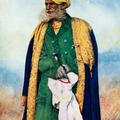
A magnificent postcard by the Australian painter Mortimer Menpes (1860-1938), based on a visit to India he made for the 1903 Darbar. An ageing warrior is given life by dazzling colors.
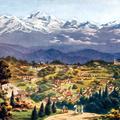
The postcard artist, who signed other cards in this India series published by an obscure Munich firm, was Johann Friedrich Perlberg (1848-1921). Son of a painter, he best known for his paintings of Egypt, Palestine and the Middle East, many of which
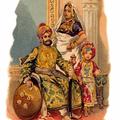
Many of the earliest postcards were actually advertising cards, given the expense of producing lithographic cards like this French view of a 17th century Nawab and son. The woman in the back holds a nautch girl's pose.
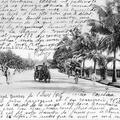
An example of how writing could create something aesthetically appealing and seemingly become one with an image.
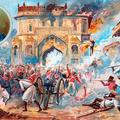
The back of this advertising card for "Price's 'Lighting Tapers,' for lighting candles, gas, &c, White or coloured, in various thicknesses, and 12 or 22 inches long," provides this caption about what is also known as the First War of Independence or
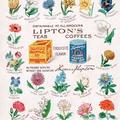
An early Lipton's advertising postcard; the firm used postcards very effectively to spread the new habit of tea drinking and associate it with its brand of Ceylon-grown teas.
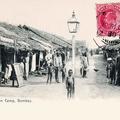
One of the most popular views of plague camps in Bombay at the turn of the century, here with a nicely positioned stamp. Postmarked June 30, 1906, Mumbai. Addressed to “Miss Amy L.
