Burma Oil Wells, Yenongyaung
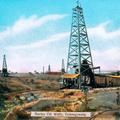
The British discovered that there was an oil industry in Burma even before they got there in 1795, with a number of wells in Yenangyaung in central Burma under the hereditary control of Burmese families.
The British discovered that there was an oil industry in Burma even before they got there in 1795, with a number of wells in Yenangyaung in central Burma under the hereditary control of Burmese families.

The Writer's Building in Kolkata was where India was governed from the late 1700s until 1857. "Writers" were recruits who came from England to make their fortunes with the British East India Company; some became fabulously wealthy "nabobs," although
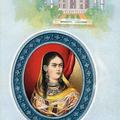
India Tea Growers advertising postcard. [Verso] Postmarked St. Louis, Missouri, Oct. 1, 1910 and sent to Mrs. W.M. Trane, Trowbridge, Ill. [Illinois, USA]
[Original caption, Verso] Mumtaz-I-Mahal-"the Exalted One of the Palace"-Empress of the Great
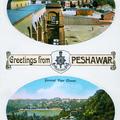
This early and rare double-view "Greetings from" postcard was made for the Royal Sussex Regiment, then stationed in both Peshawar and (presumably during the winter) in Cherat hillstation. The frames around both images are embossed. K.C.
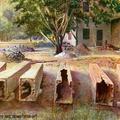
[Original caption] Ravages of White Ants: beams eaten out. The insect tribes of India may be said to be innumerable. The heat gives incredible activity to noxious and troublesome insects including Moths and Ants of the most destructive kind.
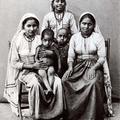
Moplahs are the Muslim descendants of Arab traders who married local women and settled along the Malabar coast over the centuries.
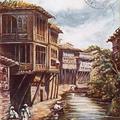
This Aquarelle Series postcard was likely printed by Raphael Tuck & Sons for Hartmann.
This particular card, with the carefully placed stamp was sent by Ernest L. of the XII Hussars in Deccan to Miss Marcineau in France on July 22, 1909. [Verso] Dear
![Benares - Assec [Assi] Ghat](https://www.paperjewels.org/sites/default/files/styles/square_thumbnail/public/slides/ghat-varanasi_0.jpg?itok=2JwMi_AI "Benares - Assec [Assi] Ghat")
Assi Ghat is on the southern end of the city, where the Assi River meets the Ganges, and where the Goddess Durga is said to have thrown her sword after killing the demon Shumbha-Nishumbha.
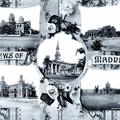
An early multi-view collotype of Madras, with five separate photographs, in a decorative flower frame.
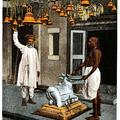
This temple dedicated to the Hindu god Shiva in Mumbai is shown on an unusual lithographic postcard from roughly 1905. Lithographs were rarely produced by this time, having dominated early postcard production before 1900. The series this postcard was
