Cherat Hill
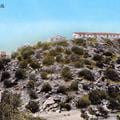
Cherat hill’s position gave commanding views over the Peshawar valley and toward Kohat/Indus, which made it strategically useful as well as climatically attractive to colonists.

Cherat hill’s position gave commanding views over the Peshawar valley and toward Kohat/Indus, which made it strategically useful as well as climatically attractive to colonists.
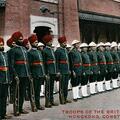
Indian policemen and soldiers were an integral part of the British Empire's law and order apparatus in its Hong Kong colony. William Quin, after becoming Captain Superintendent in 1862, initiated direct recruitment from India.
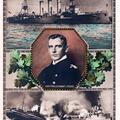
[Original German titles, translated] "Emden" Five English Ships in the Bay of Bengal. Upon the Return of First Lieutenant v. Muecke with the Emden crew in Germany [end]
The story of His Majesty's Ship the Emden is one of the most captivating of World
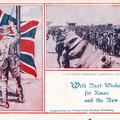
With Best Wishes for Xmas and the New Year
The fundraising postcard by a women's group in Bombay shows Turkish prisoners likely captured in 1917 when British Indian troops captured Baghdad and other areas of modern Iraq from the Ottoman Empire.
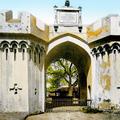
In 1835, Robert Smith, a Military Engineer, constructed this building used for ammunition storage. It apparently still stands as a ruin, after the actual depot was blown up during the Uprising of 1857.
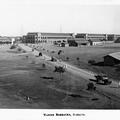
A rather grand postcard, with the depth-of-field of a large albumen photograph, of Karachi's oldest colonial structures, dating to 1843, named after General Charles Napier who conquered Sindh that year and became its first Governor.
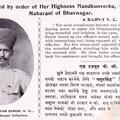
[Original caption] A RAJPUT V.C. "For most conspicuous bravery and devotion to duty in leaving cover to assist in his Commanding Officer who was lying wounded and helpless in the open.
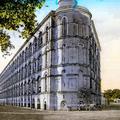
Fort William in Calcutta, completed in 1781, is a remnant British colonial rule.
Dalhousie Barrack, a four-storey building, is a captivating component of Fort William. Today it is the Military Head quarters of the Eastern Command of Indian Army.
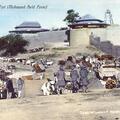
This Mohmand conflict in 1908 was with the so-called “Hindustani Fanatics” who found sanctuary from the Sikhs in the mountains north of Swat in Northwest Frontier Province (NWFP, now KPK or Khyber Pakhtunkhwa) in the 1840s (they survive to this day).
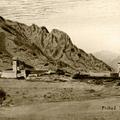
This image probably dates from the 1890s and was made by William Darcia Holmes, the father of Randolph Holmes who published these postcards from their Peshawar studio.
