A Typical Yarkundi
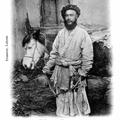
A Central Asian trader who made his way down the slippery, winding routes of the Hindu Kush, Karakoram and Himalayan ranges into Kashmir's valleys.
A Central Asian trader who made his way down the slippery, winding routes of the Hindu Kush, Karakoram and Himalayan ranges into Kashmir's valleys.
![A Mhamadan [Mohammadan] Mullah, N.W.F.P.](https://www.paperjewels.org/sites/default/files/styles/square_thumbnail/public/slides/mullah-2-3.jpg?itok=h_I8TBnC "A Mhamadan [Mohammadan] Mullah, N.W.F.P.")
The word Mullah owes its origin to the Arabic "mawla", or "guardian." A mullah is the Muslim equivalent of a priest or religious authority and guide.
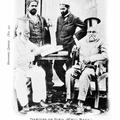
Every person in this literate Hindu caste of administrators in Hyderabad, Sindh is wearing at least one Western article of clothing.
One card, postmarked in Karachi on Nov.
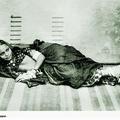
Sometimes also called "Sleeping Hindoo Woman" this postcard was about as risque as they got and was labelled "India circulation" in an album of Gobindram Oodeyram postcards put together by one S.

"Persian" is likely a misnomer; the traditional waterwheel method of lifting water probably came from the area and went to Persia and came back centuries later under a new name.
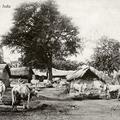
This was a common shot across publishers, usually shot in Bengal, with cows, dwellings, dung patties, a [broken] cart wheel and interestingly in this case, no people. Devare & Co.
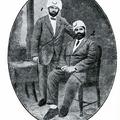
This card, with the handwritten title "Mr. Mahamad Ali and Mr. Shaukat Ali, Homerule leaders" was sent by B. Bhorey in Baroda to "Mrs. A.G.
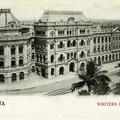
The "Writer's Building" in then Calcutta is from where British India was governed from the later 1700s until 1857. "Writers" were recruits who came from England to make their fortunes with the British East India Company; some of them became
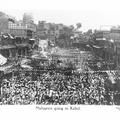
Muslims assembling for flight to Kabul during the Khilafat Movement.
This rare image, probably taken in the summer of 1920, was taken during the height of the Khilafat Movement against British rule.
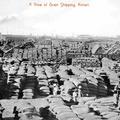
The wester Raj province of Sindh was part of Bombay Presidency until 1936, a sleepy backwater until an irrigation project along the lower Indus in 1932 started the transformation of Karachi into one of the world's largest cities.
