The Barack No. 5. (Dalhousie)
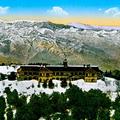
Army barracks crowned by the Himalayan mountains. Dalhousie is a hillstation in Chamba district, Himachal Pradesh founded in 1854 the by the original British colonists of India, the East India Company.

Army barracks crowned by the Himalayan mountains. Dalhousie is a hillstation in Chamba district, Himachal Pradesh founded in 1854 the by the original British colonists of India, the East India Company.
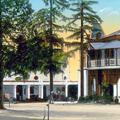
When Rudyard Kipling visited Mussoorie in the summer 1888, he wrote two verses by hand in a book of photographs in an album of photographs by Alex Hill (now in the Library of Congress in Washington D.C.), which can be found on the website of The
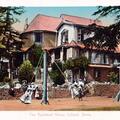
Founded in 1866, this school was founded in 1866 and soon took over this former home of a Viceroy. It remains a premiere educational institution in India, and has grown to serving almost a thousand students from a few dozen in the early days.
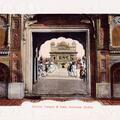
A beautiful embossed and hand-tinted card showing the entrance to Harminder Sahib, the holiest of Sikh sites in Amritsar. All the subdued colors on the entrance way were added by hand through stencils, individually on each postcard.
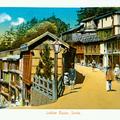
"Of recent years, the monkeys have become a decided nuisance in Simla," wrote Edward Buck in Simla Past and Present (1903, p.
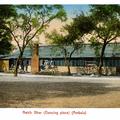
A dance hall in an important railway junction and cantonment made famous in Rudyard Kipling's novel Kim. This hall, from the title, possibly featured dancing or "nautch" girls, or it might have been a dance hall where British soldiers held dances
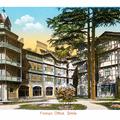
"The foreign office is a picturesque building, somewhat in the Chalet style, built in 1888. It is located near Chaura Maidan" (Gazetteer of the Simla District, 1904, p. 123). Rudyard Kipling, in his story Wressley of the Foreign Office (Plain Tales
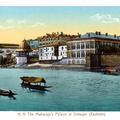
In her Tourist's India (1907), Eustace Alfred-Reynolds Ball writes: "Colonel Durand in his "Making of a Frontier" gives in few words a picturesque yet accurate description of Srinagar from the river : "The town, a huddled mass of lightly-built
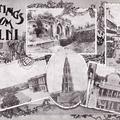
An early Greetings from Delhi postcard that seems to have been constructed from a number of other postcards given the way the titles appear on the images.
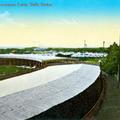
Although the word "concentration camp," has since been primarily associated with Nazi concentration camps during World War II (1939-1945), the word was in use earlier in wider contexts as a place where many people were concentrated in one location,
