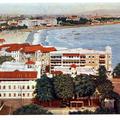
Hyderabad. Arms Sellers
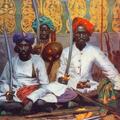
[Original caption] Arms Sellers, Hyderabad. Hyderabad, the capital of the state of the same name, is celebrated for its swords and other arms.
[Original caption] Arms Sellers, Hyderabad. Hyderabad, the capital of the state of the same name, is celebrated for its swords and other arms.
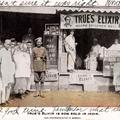
One of those fascinating advertising postcards that sheds light in the little remembered tonics and remedies that coursed the world in the 19th and 20th centuries – and still do. True's Elixir was developed by Dr.
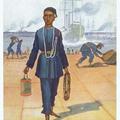
Lascars were sailors, mostly from the subcontinent, serving on European ships that sailed the world and who spoke their own multinational tongue, "Lascari." Throughout the 16th through 19th centuries many landed in Britain and America, with a few
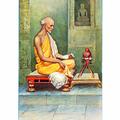
Another Dhurandhar postcard masterpiece, with the pale green background and statue of Lord Mahavir, the last Tirthankara of the Jain religion setting off the living priest in the foreground.
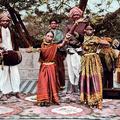
An apparently hand-stenciled color card likely made from a photograph at the Ravi Varma Press facilities in Karla, outside Mumbai. Note how carefully everyone, especially the two dancers, are holding their pose in this vibrant frozen moment.

A postcard sent from Bareilly in UP to a woman in France in 1905 shows how the placement of stamps was on the front of a postcard was once itself a performative art.

One of Tuck's very first Kolkata postcards, before they put explanatory captions on the back.
Chitpur (Chitpore) owes its name to goddess Chiteswari whose temple was destroyed during the earthquake of 1737. Chitpur road, one of Kolkata's oldest roads
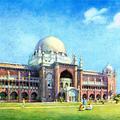
[Original caption] The Museum. As befitting an important town like Bombay, the Museum is indeed a very fine one and contains many valuable collections. [end]
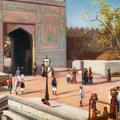
[Original caption] City Gate. Jeypore , the capital of the protected native state of the same name in Rajputana, is a walled city, entered by a picturesque gateway.