The Pagoda, Eden Gardens, Calcutta
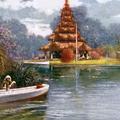
[Original caption] The Pagoda, Eden Gardens. The Eden Gardens are beautifully laid-out grounds and were for many years the gathering place in the evening of the fashionable society of Calcutta.
[Original caption] The Pagoda, Eden Gardens. The Eden Gardens are beautifully laid-out grounds and were for many years the gathering place in the evening of the fashionable society of Calcutta.
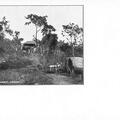
There are very few early postcards – besides a handful of missionary ones – of Assam, an area in northeastern India brought under British control in the first half of the 19th century following wars with the then Kingdom of Burma.
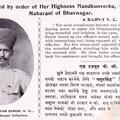
[Original caption] A RAJPUT V.C. "For most conspicuous bravery and devotion to duty in leaving cover to assist in his Commanding Officer who was lying wounded and helpless in the open.
While an exchange of written messages has been part of history for a long time, the concept of a regular postal service seems to have arisen in Europe during the 15th century when French students were requesting so many goods, a regular service was
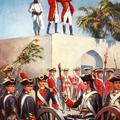
Famous British Battles, Plassey June 25, 1737
[Original caption] Plassey.
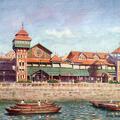
[Original caption] The Royal Bombay Yacht Club. One of the most exclusive clubs in the East, patronized only by the most prominent citizens. [end]
Founded in 1864, this still extremely exclusive club survives in a building next to this one,
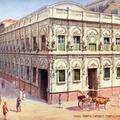
[Original caption] Hindu Temple (Monkey Temple). Kalbadevi Road, Bombay. The famous temple showing very fine architecture. [end]
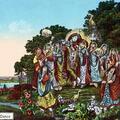
An unusual postcard featuring Krishna's sacred dance with the gopis. This card was sent to a Miss Bourn, 8 Union Lane, High Street, Strafford, London E 15 from Sergeant Bourn, Rangoon, Burma:
"Dear May Just a line hoping all are well, sorry I have no
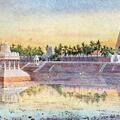
[Original caption] Mylapore Tank. Madras is built in a straggling fashion along the seashore. Most of the roads run between avenues and are flanked by groves of palms and other trees.
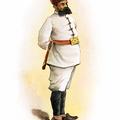
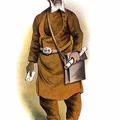
The Indian Councils Act of 1861 was the foundation for the Indian Police Service, one whose fine exemplars was this Calcutta Policeman, which the emblem on his belt so proudly proclaims. His instrument of choice is the lathi, from the Bengali word
