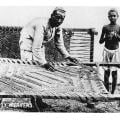
Collotype

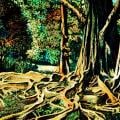
There are not that many postcards showing the charpai [charpoy], a ubiquitous feature of Indian life, defined in Hobson-Jobson (1903, p. 185) as "the common Indian bedstead, sometimes of very rude materials, but in other cases handsomely wrought and…
Read more

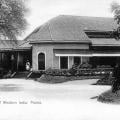
Benjamin B. Cohen, in his highly informative study of Raj clubs, In the club Associational Life in colonial South Asia writes: "Locating the center of the [colonial] club's sphere at Government House de-centered the club and reflects the strong link…

Read more

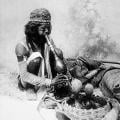
Not many snake charmers make it into a photographer's studio, but here the soft floral backdrop and line of the flute reinforces the sense of the cobras emerging gracefully from their basket.

Read more

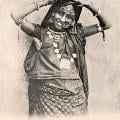
This card, sent by a Mr. Seamus on Dec. 1, 1905 from Kolkata, has a stamp positioned in the top that extends the tilt of the woman's head.

Read more

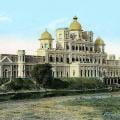
One of the most famous palaces in Lucknow, built by Nawab Ghazi-ud-Din Haider in the early 19th century, the Chattar Manzil epitomized the eclectic mixture of European and Indian architectural styles that made Lucknow so photogenic for early…

Read more

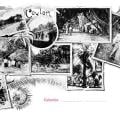
A later "Greetings from" postcard where the divided back, allowing people to write messages on the back of cards in addition to the address, allowed the publisher to put many more photographs of the place on the front.

Read more

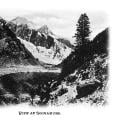
Postmarked Dec. 19, 1903, and sent to Mr. Harington, Bath, England: “Simla 16.12.03. Thank you so much for sending the very pretty pictures cards of Bath. They don’t get them up half as well out here! Best Love, Gracie.”

Read more

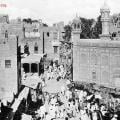
A rare postcard from inside the city of Multan, one of the oldest cities in Punjab if not South Asia. Here Alexander the Great is said to have received the wounds in battle that later led to his death (326 BCE).

Read more