Attock Fort and the River Indus
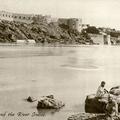
A nicely composed contrast between the men in the foreground, and the sprawling Mughal-era fort in the background.
[Verso, hand written] On the road between Peshawar and Rawal Pindi [end]
A nicely composed contrast between the men in the foreground, and the sprawling Mughal-era fort in the background.
[Verso, hand written] On the road between Peshawar and Rawal Pindi [end]
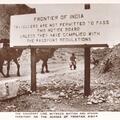
A nicely composed view of one of the most popular postcards from what was British India's Northwest Frontier Province (NWFP), now known as Khyper Pakhtunkhwa (KPK). Note how the camels flow into the sign and the camel driver is fully visible leading
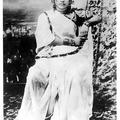
"Hindustani girls" was used to refer to women from "Hindustan," or the broad belt across northern India east of Punjab known as U.P., then "United Provinces" and now "Uttar Pradesh." It would have been a term appropriate to a Peshawar based
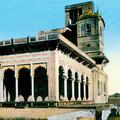
Built in the early 1630s by the Emperor Shah Jehan, the "Palace of Mirrors" or "Crystal Palace" in Lahore Fort is full of glass tiles that reflect light. A UNESCO World Heritage site, the roof was only recently properly restored.
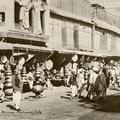
"Peshawar City was important in Graeco-Buddhist times and its coppersmiths' bazaar must have started then," wrote Randolph Holmes, proprietor of the studio which published this postcard in a later memoir, Between the Indus and Ganges Rivers. "The
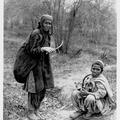
Mela Ram was a photographer who might have warmly welcomed the advent of the real-photograph as a way for his art to take precedence over the vagaries of publishing in collotype or halftone using hand-tinted color to enhance images (there are few
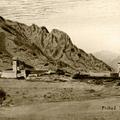
This image probably dates from the 1890s and was made by William Darcia Holmes, the father of Randolph Holmes who published these postcards from their Peshawar studio.
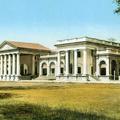
Benjamin J. Cohen, in his recent book In the Club Associational Life in Colonial South Asia (2015, p. 69) quotes Kipling writing of his life around 1879 at the Punjab Club: "'This was the setting in which my world revolved.
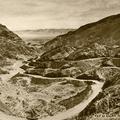
Most postcards of the Khyber Pass show the decline of the roadway towards the Afghan border at Torkham, where the Frontier of India [now Pakistan] sign stood.
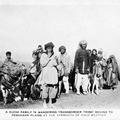
Occasionally, nomads — those most fleeting of human subjects and least sedentary inhabitants of our planet—were caught on a postcard.
