Hindoo Ayahs
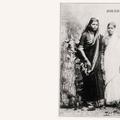
An early court-sized card made from an albumen photograph with the studio inscribed in the glass negative at the bottom.
Hobson-Jobson defines "AYAH, s. A native lady's-maid or nurse-maid.
An early court-sized card made from an albumen photograph with the studio inscribed in the glass negative at the bottom.
Hobson-Jobson defines "AYAH, s. A native lady's-maid or nurse-maid.
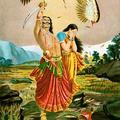
[Original caption] Jatayu-Vadha: - Ravana, while carrying away Sita, is being attacked by the bird Jatayu, with whom he fights. [end]
Jatayu, the holy bird, lived in Panchavati close to the hut of Rama.
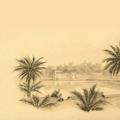
This unusual, sepia-ish lithographic postcard is probably by Paul Gerhardt at the Ravi Varma Press even though it is not signed by him with the Press imprint.
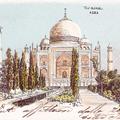
One of the earliest, if not the earliest postcard to the Taj Mahal.
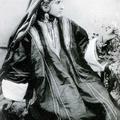
A postcard that shows off the great detail achievable in the collotype printing process.
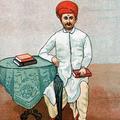
An lithographic postcard, published in India, possibly by "Haji Yusuf Haji Mohammed. Pictures, Post-cards & Cutlery Merchant. Grant Road Cross-Lane.
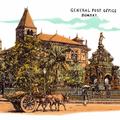
The GPO in Bombay was already the largest post office in India when this card was produced in 1899, with tens of millions of postcards passing through in a city of less than a million.
![[Fairey] IIID Crash Bombay](https://www.paperjewels.org/sites/default/files/styles/square_thumbnail/public/slides/raf-crash_0.jpg?itok=Eh_61vhU "[Fairey] IIID Crash Bombay")
[Verso Original handwritten caption] After an argument with the sails of a sampan. [end]
An unusual real photo postcard of the Fairey IIID, an early 1920s British seaplane that "was popular with aircrew but they were difficult to maintain and when
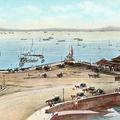
The pier across the Taj Hotel where the Gateway to India now stands. This area was expanded with a sea wall and entry steps before the Gateway to India was completed in 1924. The Japanese-style pavilion seen here was removed.
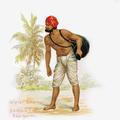
A very early India-printed postcard signed by the chief lithographer at the Ravi Varma Press, Paul Gerhardt. Gerhardt was probably aware of Ravi Varma's prize-winning painting that year, Water Bearer, and we know from Raja Varma's diaries - the great
