Queen's Road, Bombay
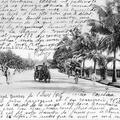
An example of how writing could create something aesthetically appealing and seemingly become one with an image.
An example of how writing could create something aesthetically appealing and seemingly become one with an image.
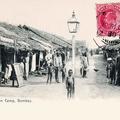
One of the most popular views of plague camps in Bombay at the turn of the century, here with a nicely positioned stamp. Postmarked June 30, 1906, Mumbai. Addressed to “Miss Amy L.
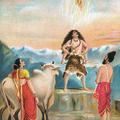
[Original caption] Shankar receives the river Ganga on his head in compliance with the prayers of Bhageeratha. [end]
This image is from a famous painting by Raja Ravi Varma (1848-1906), one of India's most important painters.
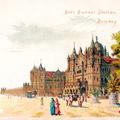
Postmarked 22 March 1905 in Bombay, and April 18 1905 in Salt Lake City, Utah. Addressed to “H. H. Rogers Esq. Konupa Makme-Kopunuka, Odessa South Russia-in-Europe." [Recto] “Magnificent station but far too big for requirements.” Today it is the
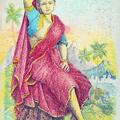
An extremely rare early postcard by an little-known lithographer, W. Cooper, in Bombay. It looks to crude to have been made at The Ravi Varma Press. Cooper seemed to prefer risque images.
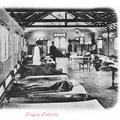
Illustrated postcards actually came to Mumbai at an inauspicious moment.
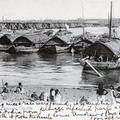
Handwritten on the back is a part of a longer message that discusses the plague then present in Bombay: “A poor soldier got it but recovered a Sergeant’s child died of it & Major Murray has been very ill and is only a little better.
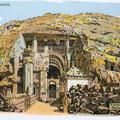
An early court-sized postcard by Paul Gerhardt, chief lithographer at The Ravi Varma Press in - yes - Karli, outside Bombay. The firm moved its premises here in the late 1890s.
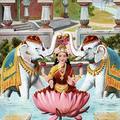
[Verso] Gaja-Gauri :- Goddess Parwati. [end]
From a painting by Raja Ravi Varma, Parvati is the Hindu goddess of fertility, love, beauty, marriage, children, devotion, divine strength and power.
![[Karla Station]](https://www.paperjewels.org/sites/default/files/styles/square_thumbnail/public/slides/karla-station_0.jpg?itok=ktTgi9Gt "[Karla Station]")
This postcard shows a scene at the platform of Karla railway station outside Mumbai where The Ravi Varma Press was headquartered. On the platform, a barefoot man is holding a stick, another is smoking a hookah.
