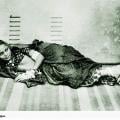
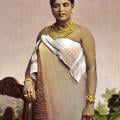
Sometimes also called "Sleeping Hindoo Woman" this postcard was about as risque as they got and was labelled "India circulation" in an album of Gobindram Oodeyram postcards put together by one S. Annlickar in 1905.
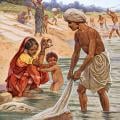
One day was often fixed each week or fortnight for washing a complete household's clothes. The concept of a washing day is said to have reflected a family's social status.
"Persian" is likely a misnomer; the traditional waterwheel method of lifting water probably came from the area and went to Persia and came back centuries later under a new name.
"At the peak of the Tamil drama movement, she created a sensation like no other actor. Poets penned songs in her praise, painters craved to leave their artistic impressions of her portraits, smitten kings and noblemen chased her as their dream…
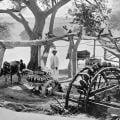
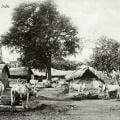
This was a common shot across publishers, usually shot in Bengal, with cows, dwellings, dung patties, a [broken] cart wheel and interestingly in this case, no people.
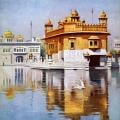
[Original caption] Amritsar is an important commercial city, capital of the province of the same name in the Punjab. It was founded in 1574 by Guru Ram Das, who excavated a sacred tank, which gives the city its name "Pool of Immortality".
Moorli Dhur & Sons dominated postcard publishing in the Punjab after the turn of the century, with numerous series and views of cities all over northern India.
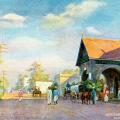
From a painting by Mortimer Menpes, a prominent Australian painter settled in England, this postcard was used in part to advertise the book India by Flora A. Steel (1905) which included illustrations by Menpes based on his 1902-03 trip to the…
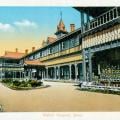
Walker Hospital was opened in 1902, with 20 beds for Europeans and was meant to be self-supporting. This exemplary hospital for the time was based on a gift by a former resident of Simla, Sir James Walker. Patients paid Rs. 5 per day for their care.