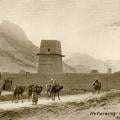
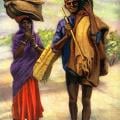
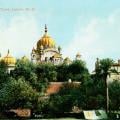
The area around the Khyber Pass is and was dotted with fortified towers where people could barricade themselves in case of attack and store grain; during the many British military expeditions in the area during the 19th and early 20th century the…
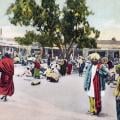
Bangalore is well-known for sprawling shopping malls, although in British times it was largely a cantonment town and only recently has become an information technology hub and one of the cities most prominently linked to the outsourcing of Western…
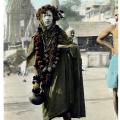
A fakir is a hermit who often lives in seclusion and devotes his life to religion. In the holy city of Varanasi, the term fakir refers to "sadhus" (one who abstains from worldly pleasures) and "yogis" (one who practices Yoga).
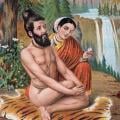
[Original caption, verso] Vishwamitra-Menaka :- This scene shows Menaka as tempting the great sage Vishwamitra, who yields to her and gets Shakuntala by her. [end]
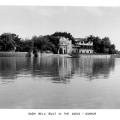
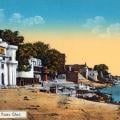
Sadh Bela [Belo] is a small island in the Indus river next to the city of Sukkur, Sindh. On it is a Hindu temple complex initially built in the early 19th century and still the site of an annual festival.
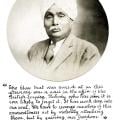
[Original caption] "The blow that was hurled at us this afternoon was a nail in the coffin of the British Empire. Nobody who has seen it is ever likely to forget it. It has sunk deep into our own soul.
Assi Ghat is on the southern end of the city, where the Assi River meets the Ganges, and where the Goddess Durga is said to have thrown her sword after killing the demon Shumbha-Nishumbha.
The mausoleum of the great Sikh ruler of Punjab, Maharajah Ranjit Singh. Built by his son Karak Singh and completed by Duleep Singh under British rule, this is where Ranjit Singh was cremated in 1839.