Postcards of the tea industry were popular in the early 20th century and helped spread consumption of the product grown in northeast and South India and Ceylon [Sri Lanka].
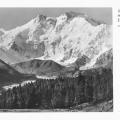
Signed in print by the expedition's leader, Willy Merkl. The cancellation on the back, on January 17, 1932 is from “Munchen, Hauptstadt der Bewegung” by which is meant Munich’s role in the origins of the Nazi movement during the Beer Putsch in 1923.
[Original caption, Verso] Shah Jehan - Famed for his Peacock Throne, blazing in the shifting natural colors of rubies, sapphires and emeralds; valued by Tavernier at $32,500,000.
The Residency is where the British representative to the Maharajah of Kashmir's court lived. Srinagar lies on both banks of the Jhelum River, a tributary of the Indus River.
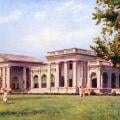
[Original caption] Punjab Club, Lahore. There aremany fine buildings in the modern part of the City of Lahore, while the picturesque old town with its balconies, projecting oriel windows, and irregular buildings will delight the artist.
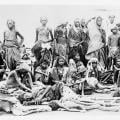
Major Indian famines were caused by droughts and poor food distribution policies. Though uneven rainfall was a major cause of Indian famines in the 19th century, faulty administrative and economic policies were equally responsible.
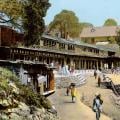
Kasauli is a cantonment hillstation not far from Shimla in Himachal Pradesh. It was founded in 1842, with a small strip of a bazaar typical of other small towns, although here originally photographed with a dramatic and welcoming diagonal.
This postcard shows a scene at the platform of Karla railway station outside Mumbai where The Ravi Varma Press was headquartered. On the platform, a barefoot man is holding a stick, another is smoking a hookah.