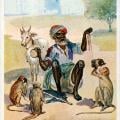
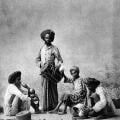
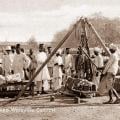
In her absorbing and little known memoir At home in India ; or Tâza-be-Tâza (1903), Mrs. Margaretta Catherine Reynolds wrote in the section Indian Jugglers "It was in the verandah of the Bishop’s Palace, that I first witnessed the wonderful basket…
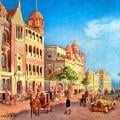
[Original caption] Clive Street, Calcutta. This perpetuates the name of Clive who retook Calcutta after it had been captured by the Nawab of Bengal in June, 1756.
Probably printed by Raphael Tuck & Co. in London on behalf of Hartmann, one of the earliest Tuck-printed set of 6 postcards of India, likely all made by the same unknown Aquarelle painter.
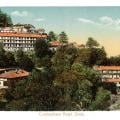
While this postcard is from the early 1900s, as late as 1938 Murray's Handbook for India, Burma and Ceylon still recommended Costorphan's Hotel, with Cecil (Faletti's), Grand and Elysium to its travelers to the hillstation.
Mumbai grew from the 1860s through the 1890s largely because of the international cotton trade, which went from exporting cotton to textile manufacturing mills dotting the city.