A Benares Brahmin
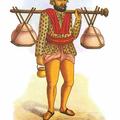
An early (undivided back) postcard from Bombay's premiere bookstore and important postcard publisher and retailer at the turn of the century.
An early (undivided back) postcard from Bombay's premiere bookstore and important postcard publisher and retailer at the turn of the century.
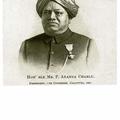
Much of the initial Independence struggle was peaceful, led by often hardly remembered Anglicized lawyers like Mr. P.
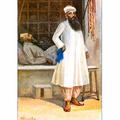
Bohras are Gujarati Muslims known as a business and trading community; they flourished in Bombay during the late 19th century and Karachi since Partition for example. This postcard by M.V.
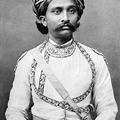
"RAJA, RAJAH , s. Skt. rājā, 'king.' The word is still used in this sense, but titles have a tendency to degenerate, and this one is applied to many humbler dignitaries, petty chiefs, or large Zemindars.
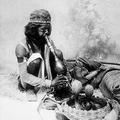
Not many snake charmers make it into a photographer's studio, but here the soft floral backdrop and line of the flute reinforces the sense of the cobras emerging gracefully from their basket.
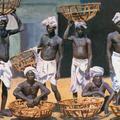
[Original caption] Calcutta Coolies. The Coolies of Calcutta, otherwise porters or carriers, are men of fine physique, and are able to carry exceptionally heavy weights supported on their heads.
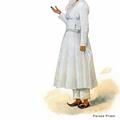
From Dhurandhar's earliest postcard series featuring the people of Bombay. Once again, a gesture defines character, with the white space next to the priest space for the sender to write a message.
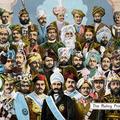
A collage which would have been assembled from a variety of photographs, not a single sitting. In the bottom center with the black jacket is the Nawab of Hyderabad, the richest of them all.
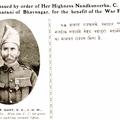
[Original caption] Jemadar Mir Dast 5th Wilde's Rifles. Won the V.C. for great bravery in the fighting around Ypres. Issued by Order of Her Highness Nandkunverba, C.I. Maharani of Bhavnagar, for the benefit of the War Fund. [end]
From a series of
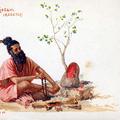
A very early postcard printed in India. Gosavi is a Marathi word that refers to someone who has renounced worldly pleasures and wears garments of the "brick-dust" color shown here.
