Borah Trader
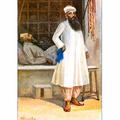
Bohras are Gujarati Muslims known as a business and trading community; they flourished in Bombay during the late 19th century and Karachi since Partition for example. This postcard by M.V.
Bohras are Gujarati Muslims known as a business and trading community; they flourished in Bombay during the late 19th century and Karachi since Partition for example. This postcard by M.V.
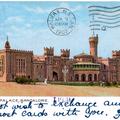
One of the more priceless messages on vintage postcards: "I do not want to exchange any more post cards with you. F. Terry."
Postmarked Kolkata 1907 and sent to Miss Florence Irwin, 256 Gottingen Street, Halifax, Nova Scotia, Canada.
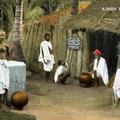
"In India, the toddy shop may well be called ‘The Poor Man’s Club’," wrote Mahatma Gandhi in Harijan (1928),"the well- to-do folks have Willingdon Clubs and Gymkhanas of diverse description, to fulfil their instinct of sociability and to give them
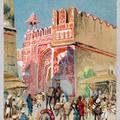
Among the many very early illustrated postcard publishers was the Vienna-based firm of Joseph Heim.
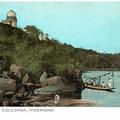
Actually above Mir Alam Tank, Hyderabad. An unusual postcard, not only because it is a late lithographic one, but also because the focus is on the rocks, lake and vegetation, the boat and tiny figure standing in the foreground.
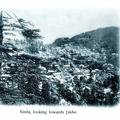
Raaja Bhasin, in his Simla The Summer Capital of British India (2011) has a nice quote about Shimla during the Raj and afterwards: "With this detached atmosphere from the rest of India, it is no wonder that the blame for the disasters of the Afghan
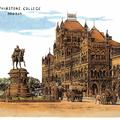
One of the most educational institutions in India, Elphinstone College was established in 1856. Graduates include Bal Gangadhar Tilak, Sir Pherozshah Mehta, and Jamsetji Tata.
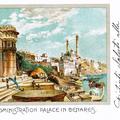
The history of Varanasi, also called Benares, can be traced back to the time of Gautama Buddha 2,500 years ago when it was the capital of Kashi.
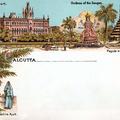
Postmarked May 25, 1898 (?) and addressed to Master Leslie Hurst, 4 Waterlook Road, Nottingham, England: "My dear Leslie I have another p.c. [postcard] for you – Did you go to Gooe fair. It is your fair day today.
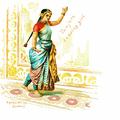
Among the first series of postcards printed in India by The Ravi Varma Press, this lithograph by the German artist at the Press, Paul Gerhardt, shows how in these very early days, placing the title was not quite fixed by convention, It could easily
