Indian Army Type of Team
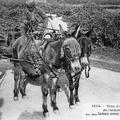
"The Indian experiences in France were the most extensive and, by and large, the happiest.
"The Indian experiences in France were the most extensive and, by and large, the happiest.
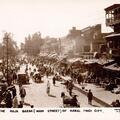
A rich bazaar view by a little known publisher once based in Peshawar whose wide variety of postcards of Punjab and NWFP is possibly unrivaled in the region during the early 20th century. Moorli Dhur & Sons of Amballa, and H.A.
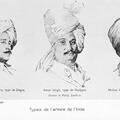
A French postcard celebrating the presence of Indian troops with the British army fighting against the Germans. Dafadar Chanda Singh writes to Arur [sp?] Singh in Lahore District, Punjab in Urdu on Nov.
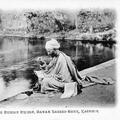
A nicely-composed Bremner photograph at a sacred site in Kashmir, with the priest holding a rosary and reading on a diagonal closed at the bottom left of the vignette.
![[Post Office English Mail Expected on]](https://www.paperjewels.org/sites/default/files/styles/square_thumbnail/public/slides/english-mail_0.jpg?itok=fxht_wCj "[Post Office English Mail Expected on]")
An early real photo postcard of a post office with signs indicating the schedule for mail coming from England. Sir Malcolm Darling wrote about the importance of this mail when he was a young I.C.S.
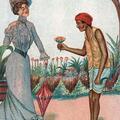
A colonial offering, on a rare lithographic card, both obsequious and a caricature of the snotty memsahib.
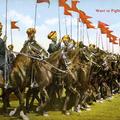
[Original caption] Want to Fight for England. Members of the Indian native regiments are clamoring to fight for England. Our photo shows the Indian native cavalry. [end]
The International News Service was founded by William Randolph Hearst, the U.S.
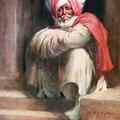
[Original caption] A member of the ancient Hindu fighting race which flourished and conquered mainly in Western and Northern India in the twelfth century. [end]
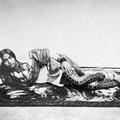
The great Hindi/Urdu writer Munshi Premchand describes, from the point-of-view of Suman, the heroine of his first novel Sevasadan, the complex view she has of Bholi, a courtesan living across the street from her:
"Suman had never met any courtesans,
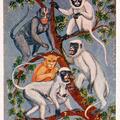
"It was curious, for example, to hear us spoken of as ‘the Monkey People’," wrote longtime Punjab I.C.S. Officer Sir Malcolm Darling in his memoir. He continued:
"Nor was it altogether palatable to be told by a highly educated Brahmin—‘you (that is,
