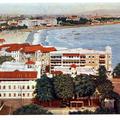
Parsi Ladies
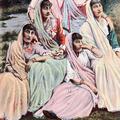
One of the most popular early postcards of Parsees was this arresting composite portrait by Clifton & Co. The original albumen likely dates to the late 1890s.
One of the most popular early postcards of Parsees was this arresting composite portrait by Clifton & Co. The original albumen likely dates to the late 1890s.
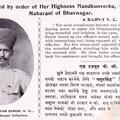
[Original caption] A RAJPUT V.C. "For most conspicuous bravery and devotion to duty in leaving cover to assist in his Commanding Officer who was lying wounded and helpless in the open.
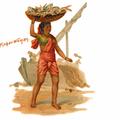
An early postcard and theme of Bombay artists, the fisher woman, with a basket of fish on her head. A fishing vessel is in the background, its mast at an angle which adds energy to her pose.
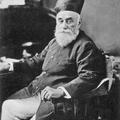
The "father of Indian industry." Jamsetji Nusserwanji Tata (1839-1904) was born in Gujarat and graduated from Elphinstone College in Mumbai in 1858. He founded and sold a successful trading firm, and then built a successful cotton mill that since
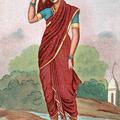
A lithographic card, most likely done by an Indian artist and printed in Britain. Note how nicely the woman is foregrounded from a low angle, with a smaller temple in the background and a swirl of green that helps give life to the portrait.
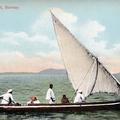
A nicely composed postcard showing the progression in the size of ocean-going vessels, from the small boat in the foreground, to the larger ship on right, and even larger ship in the distance on the left.
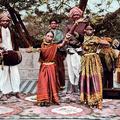
An apparently hand-stenciled color card likely made from a photograph at the Ravi Varma Press facilities in Karla, outside Mumbai. Note how carefully everyone, especially the two dancers, are holding their pose in this vibrant frozen moment.
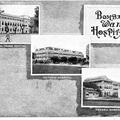
A postcard depicting hospitals in Mumbai used to treat some of the Indian troops who fought in World War I as part of the British Army.
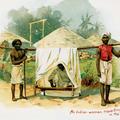
A very early postcard printed in India, most likely by The Ravi Varma Press and drawn by its chief lithographer Paul Gerhardt.