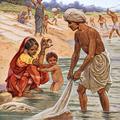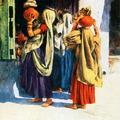
Water-Carriers at Nutha
From a painting by Mortimer Menpes, a prominent Australian painter settled in England, this postcard was used in part to advertise the book India by Flora A.
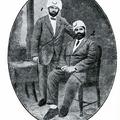
This card, with the handwritten title "Mr. Mahamad Ali and Mr. Shaukat Ali, Homerule leaders" was sent by B. Bhorey in Baroda to "Mrs. A.G.
One of several buildings built by the British, the G.P.O. still dominates one end of the Mall near Anarkali.
[Original caption] General Post Office, Lahore. Lahore is the capital of the Punjab Province of India.
For many of the artists in Bombay towards the end of the 19th century, fishermen and women were among the more striking inhabitants of the growing metropolis, visible on the long shorelines, sketched and painted frequently.
A more unusual side view of the Taj at the turn of the century, around the time when the frontal view most of us are used to today was becoming the iconic image of India.
[Original caption] Victory of Indrajit : - Indrajit brings Indra as a captive before his father Ravana with the riches and the nymphs of Indra-Loka. [end]
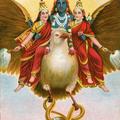
This postcard, from a painting by Ravi Varma, combines a great moment in Hindu religious
An unusual gripping portrait by Mullick Brothers in Quetta, one of the leading postcard publishers in Balochistan, well known for its photographic work with the British army.
This postcard was postmarked in Manora, Karachi, APril 9, 1909 and
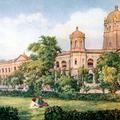
This building completed in 1888 is now the Indian Institute of Advanced Studies.
[Original caption] Viceregal Lodge. The summer residence of the Viceroy.
The 1998 census of Pakistan showed that nearly 40,000 Hindus lived in Balochistan, Pakistan's largest province by area, less than half a percent of the population (some claim a larger Hindu population). Most Hindus and Sikhs are well-integrated into
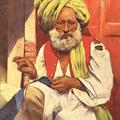
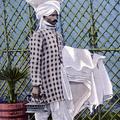
One of the of six of Tuck's early "Native Types of India" postcard series. Aquarettes were likely based on watercolors, and the artist could have been G.E. McCulloch, known for other postcards of India.