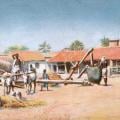
[Original caption] Madras, Cocoanut Oil Mills. Here is an oil-press at work, with one native overseer watching the tank and another, armed with a whip for the patient oxen who, going round and round with the heavy beam to which they are yoked, are…
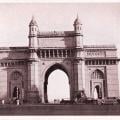
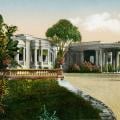
An advertising postcard from the Singer sewing machine company, aligning its brand with one of India's most iconic structures, likely soon after it was opened officially in 1924. Note the automobiles on the bottom right.
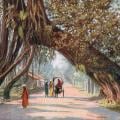
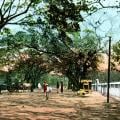
[Original caption] Ceylon. Banyan Tree Arch, near Colombo. Beyond the hot and dusty bazaars of Kolupitiya the road runs under palms and bread-fruit trees until at Kalutara it reaches a splendid natural archway made by a single banyan tree, some of…
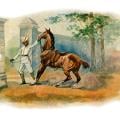
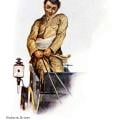
A drawing by the painter M.V. Dhurandhar that animates the meaning of "syce" as having to do with "coaxing." It was defined by Hobson-Jobson (1906): "SYCE (p. 885) SYCE , s. Hind. from Ar. sāïs. A groom.
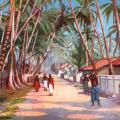
[Original caption] Road near Colombo. This is the very fringe of Pettah or native quarter of Colombo. Coconut palms shade it from the hard blue sky and "the state o the sun"; the noise of brass-workers goes on incessantly under the bright red roofs.
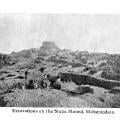
This discovery of the ancient Indus civilization, announced in 1924 by John Marshall, who led the excavations at Mohenjo-daro, radically shifted perspectives on ancient India.
Historical records in Chennia mention Nungambakkam as one of the three villages (in addition to Egmore and Chetput) that the British East India Company purchased in 1743 to form the port city of Madras.