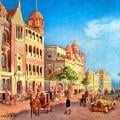
[Original caption] Clive Street, Calcutta. This perpetuates the name of Clive who retook Calcutta after it had been captured by the Nawab of Bengal in June, 1756.
Probably printed by Raphael Tuck & Co. in London on behalf of Hartmann, one of the earliest Tuck-printed set of 6 postcards of India, likely all made by the same unknown Aquarelle painter.
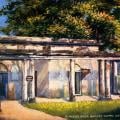
D.A. Ahuja was a Punjabi photographer based in Rangoon [now Yangon] whose studio was said to have been open through the 1960s. He published a number of Rangoon jail postcards, not a typical subject for the medium.
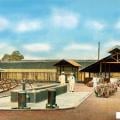
Government diaries, which still persist in India and Pakistan, were in part attempts to streamline and control the production of milk and ensure it was not diluted with water before sale to consumers. They have met with mixed success.
[Original caption] Held by Lieut. Aitkens during the defnense of the Residency. Here fifteen to twenty defenders were killed daily. From Johann's house opposite an African known as "Bob, the Nailer," fired incessantly and never missed a shot. [end]
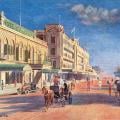
[Original caption] “Chowringhee, Calcutta. Chowringhee Road runs past the sumptuous edifice of the Bengal Club and the nest residential quarter of Calcutta to St. Paul’s Cathedral.
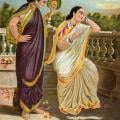
Damayanti was the wife of Nala, the king of Nishadha Kingdom
[Original caption] Being separated from her husband Nala, the fair Damayanti enters her fathers place, yet feeling deeply for her husband, she is represented as sitting in a moon light…