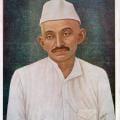
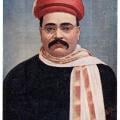
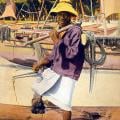
An early postcard of Gandhi, signed by K.L. [?] Joshi and dated 1921, not long after he had been termed the "Mahatma" by Rabindranath Tagore (1915) and had launched the First Non-Cooperation Movement in 1920.
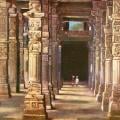
[Original caption] Colonnade, Hindoo Pillars, Kutub Minar. The Pillars, taken by the Mughal conquerors of India from a Hindoo temple, were recut to free them from idols and used to form the colonnade to the mosque.
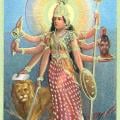
In Hinduism, Durga is a form of Devi, the supreme goddess. Durga is depicted as a warrior woman riding a lion or a tiger with multiple hands carrying weapons and assuming mudras, or symbolic hand gestures.
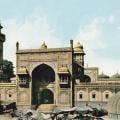
Known for its beautiful "faience" work, a type of fine pottery-tile artwork, the historic Wazir Khan mosque in the walled city of Lahore was built during the reign of the Mughal Emperor Shah Jahan by Shaikh Ilm-ud-din Ansari between 1634 and 1641.
Gopal Krishna Gokhale (1866–1915) was a leading moderate nationalist, social reformer and parliamentarian in early 20th‑century India, best known as founder of the Servants of India Society and as an important political mentor to both M. K. Gandhi…
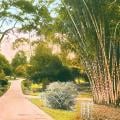
Originally created in the reign of the Sinhalese King Wickramabahu III during the 14th century, these gardens were improved by his successors and later by the English after their conquest of Kandy.
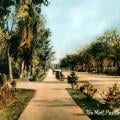
A British-cantonment era boulevard (running through the Peshawar Cantonment/Saddar area), and until recent decades could well be this peaceful and empty.
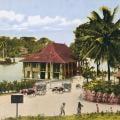
John & Co., Ceylon was an early 20th‑century commercial postcard and view‑card publisher based in Colombo (and very likely also Kandy), part of the broader trade in photographic and printed views of colonial Ceylon.
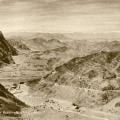
Numerous conqueror's came into the subcontinent through the Khyber Pass, including Darius I of Persia, Alexander the Great, Mahmud of Ghazni, Muhammad of Ghor, Timur (known as Tamerlane in the west), Babur, Nader Shah and Ahmad Shah Durrani.