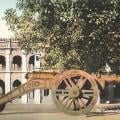
Standing in front of the Lahore Museum, this cannon became known as "Bhangian Di Top" (Cannon of the Bhangis) after it was captured by Hari Singh Bhangi and his forces in 1762, one of the Sikh confederacies.
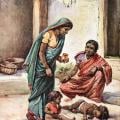
Evelyn Stuart Hardy (1865-1935), the artist who signed this card, was a British illustrator and author known for her contributions to children's literature and periodicals in the late 19th and early 20th centuries.
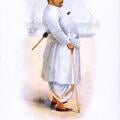
A fine portrait by M.V. Dhurandhar of a Gujarati broker. Gujrati brokers played a pivotal role in Bombay's commercial development during the late 19th and early 20th centuries.
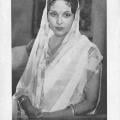
Devika Rani was a pioneering figure in Indian cinema, often hailed as the "First Lady of Indian Cinema." Born on March 30, 1908, in Visakhapatnam, she was the grand-niece of the Nobel Prize-winning poet Rabindranath Tagore.
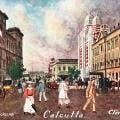
Sujaan Mukherjee writes of Frank Clinger Scallan's postcards of Calcutta: "The artist may or may not have used photographs as reference, but unlike most photographs that depict churches, public buildings or trams, these drawings recall a city that…
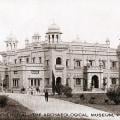
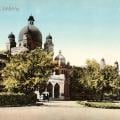
The Lahore Museum was one of the most significant colonial-era museums in British India, established in 1865 and relocated to its current location shown here on Mall Road in 1894.
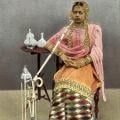
The title comes from a collotype with this title. Here the studio background has been removed, and the hand-coloring is so exquisite, especially the gold, that one could call it "hand-painted," as opposed to the usual stencil hand-tinting found on…