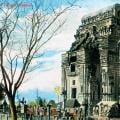
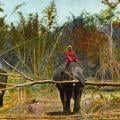
Buddhism had largely departed India by this time, having flourished between the 3rd century BCE and 13th century CE, but its temples still stood and were frequently subjects of postcards.
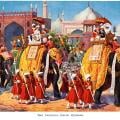
The Delhi Durbar of 1911 was one of the most "postcarded" events of the Raj, and the first time a reigning British monarch, George V and his wife Queen Mary (an avid postcard collector) attended.
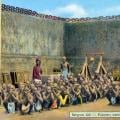
Ahuja's colorful halftones with inscribed titles are distinctive. His postcards covered not only Burma, but many of the Indian singers and others settled in this British colony loosely attached to the Raj, as well as Indian cities like Amritsar.
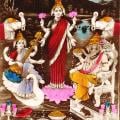
A postcard honoring the relevant deities Sarasvati, Lakshmi and Ganesha with sweets in the foreground. An exceptionally well-composed and illustrated postcard, with the bacl and white bromide print hand-tinted with colors.
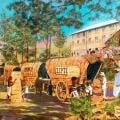
Dambatenne (often spelled “Dambatenne Tea Factory/Estate”) is a major historic tea property in the Haputale highlands of Sri Lanka (then Ceylon) closely associated with Sir Thomas Lipton’s expansion of Ceylon tea in the late 19th century.
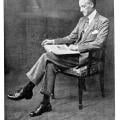
B. G. Horniman was a British journalist and editor of who became one of the staunchest press allies of the Indian freedom movement in the early 20th century.
The Franco-British Exhibition (1908) was a major "world’s fair” held in west London (Shepherd’s Bush/White City) from 14 May to 31 October 1908, created to showcase British and French industry, art, and imperial power while publicly celebrating the…
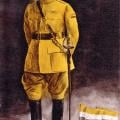
Netaji Subhas Chandra Bose (1897–1945), shown here in his Indian National Army (I.N.A.) uniform, was an Indian nationalist leader who broke with the Indian National Congress’s dominant nonviolent strategy and pursued independence through armed…
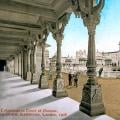
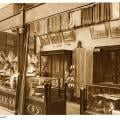
The Patiala State Court was one of the “courts” within the Indian Pavilion at the British Empire Exhibition in Wembley, 1924, a state-branded display space for Patiala’s produce, crafts, and commerce.