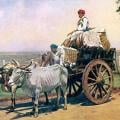
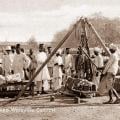
Cotton was the product that helped put 19th century Mumbai on the road to becoming one of the world's major cities. The product was celebrated on postcards like this virtual painting.
In her absorbing and little known memoir At home in India ; or Tâza-be-Tâza (1903), Mrs. Margaretta Catherine Reynolds wrote in the section Indian Jugglers "It was in the verandah of the Bishop’s Palace, that I first witnessed the wonderful basket…
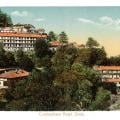
While this postcard is from the early 1900s, as late as 1938 Murray's Handbook for India, Burma and Ceylon still recommended Costorphan's Hotel, with Cecil (Faletti's), Grand and Elysium to its travelers to the hillstation.
Mumbai grew from the 1860s through the 1890s largely because of the international cotton trade, which went from exporting cotton to textile manufacturing mills dotting the city.
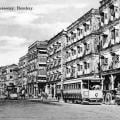
The Colaba Causeway, now known as Bhagat Singh Road, was opened in 1838 and connected Colaba and what was known as Old Woman's Island with the mainland of Bombay.
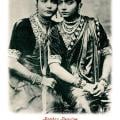
This postcard actually shows a young Gohar Jan (right) and her mother Malka Jan, both famous dancers and singers. Gohar Jan was the first recorded Indian artist, by the Gramophone company in 1904. She can be heard on YouTube.
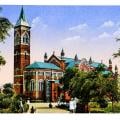
The Memorial Church in Kanpur is also called "All Soul's Cathedral"
Kanpur Memorial Church was erected in 1875 in the memory of British soldiers and civilians who died during the 1857 War of Independence or what the British called the Mutiny.