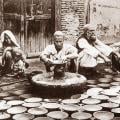
One wonders how long the sitters had to be still in this rigorously posed photograph, where the kid on the far left seems to have moved his right hand, creating a bit of a blur.
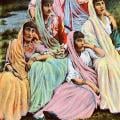
Another version of one of the most popular images of Parsee women in the late 19th, early 20th centuries. Sent to Miss E. Starr, 813 Fulham Road, Fulham, London S.W., England and postmarked Karachi July 29, 1905.
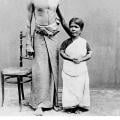
It is unusual for postcards to put two people on an ethnographic postcard, although in this case it was the height contrast that caught the attention of the publisher in this studio shot. Would it have been better had the man not sat down?
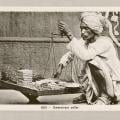
The mithai-wala was a popular postcard subject; in this composition the textile pattern behind the man gives the image energy even as the man stares somewhere far away.
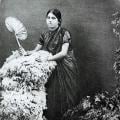
Nicolas Brothers opened a studio in Calicut [Kozhikode], a coastal city in Kerala State as early as the 1860s. The rounded top of this image suggests that it was originally an albumen photograph.
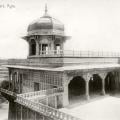
A sharp diagonal composition; in the distance is the Taj Mahal. The zenana refers to the women's quarters in this 16th century fort, largely completed under the Mughal Emperor Akbar.
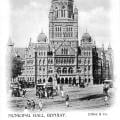
Bombay’s modern municipal headquarters was planned after the municipal corporation’s formation (1865), with the foundation stone for the new building laid in 1884.
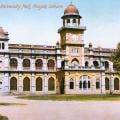
a landmark colonial-era Indo‑Saracenic / “Anglo‑Mughal” style building designed by Bhai Ram Singh, with a prominent central clock tower and domed corner elements.
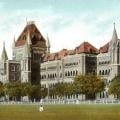
The Bombay High Court is one of the oldest High Courts of India. Constructed of black basalt, the Bombay High Court building was built in the 1870s and faces the Oval Maidan where aspiring young cricketers hone their paces.