Calcutta 1897
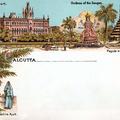
Postmarked May 25, 1898 (?) and addressed to Master Leslie Hurst, 4 Waterlook Road, Nottingham, England: "My dear Leslie I have another p.c. [postcard] for you – Did you go to Gooe fair. It is your fair day today.
Postmarked May 25, 1898 (?) and addressed to Master Leslie Hurst, 4 Waterlook Road, Nottingham, England: "My dear Leslie I have another p.c. [postcard] for you – Did you go to Gooe fair. It is your fair day today.
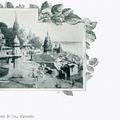
Among the earliest postcards of Varanasi, this court-sized card was made from an albumen photograph (its title is still inscribed in the negative) and framed by a floral design.
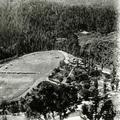
"There is possibly no name connected with Simla which to thousands of Anglo-Indians, past and present, can revive more memories of a pleasant nature than that of Annandale." writes Edward Buck, the longtime resident and master chronicler of the
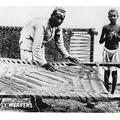
There are not that many postcards showing the charpai [charpoy], a ubiquitous feature of Indian life, defined in Hobson-Jobson (1903, p.
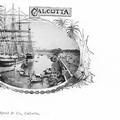
An example of how the earliest postcards of a place were often design masterpieces. Note how the palm tree merges with the ship masts, and nautical rope and elements carefully surround the whole frame.
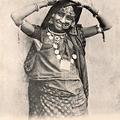
This card, sent by a Mr. Seamus on Dec. 1, 1905 from Kolkata, has a stamp positioned in the top that extends the tilt of the woman's head.

Although a coolie – "a hired labourer, or burden-carrier"(Hobson-Jobson, p. 249) – were at the bottom of the social ladder, and the word is said to originally come from Kolis, a hill-people in the Western Ghats, "whose savagery, filth and general
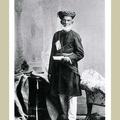
The word "peon" owes its origin to the Spanish word which means laborer.

Kalighat - Burning Ghat - Nautch Girl - Kali
One of the earliest "Greetings from Calcutta" postcards, by the German or Austrian photographer Werner Roessler who was based in the city and had the lithographic card printed in Austria from his
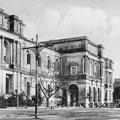
The ninth oldest museum in the world and the oldest in India, what is now known as the Indian Museum Kolkata was started in 1814 by the Asiatic Society of Bengal. A Danish botanist, Nathaniel Wallich, is considered its founder.
