Punkha Boy
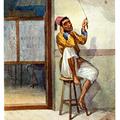
A key figure in the Raj was the punkha boy or man, who pulled the string that moved a fan in a bar or in the sleeping quarters to keep their employers cool.
A key figure in the Raj was the punkha boy or man, who pulled the string that moved a fan in a bar or in the sleeping quarters to keep their employers cool.
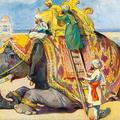
An early painted postcard, part of a series commemorating the 1903 Delhi Durbar but abstracted to something broader as "The Gorgeous East" series; note the water in the background which likely would not have been part of the Delhi Durbar.
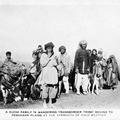
Occasionally, nomads — those most fleeting of human subjects and least sedentary inhabitants of our planet—were caught on a postcard.
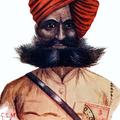
This artist-signed postcard includes a red French stamp, cancelled in 1930, in a slightly tilted position that might have meant, if the sender was adhering to The Language of Stamps, "Have you Forgotten Me?"
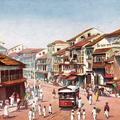
[Original caption] Pydownie Stree, Bombay (City). Pydownie Street, one of the principal highways of Bombay, is typical of the many animated thoroughfares of this busy city.
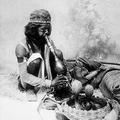
Not many snake charmers make it into a photographer's studio, but here the soft floral backdrop and line of the flute reinforces the sense of the cobras emerging gracefully from their basket.
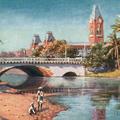
[Original caption] Madras, Central Station. This is one of the largest and finest stations in all India.
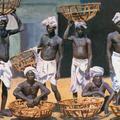
[Original caption] Calcutta Coolies. The Coolies of Calcutta, otherwise porters or carriers, are men of fine physique, and are able to carry exceptionally heavy weights supported on their heads.
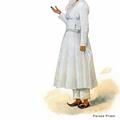
From Dhurandhar's earliest postcard series featuring the people of Bombay. Once again, a gesture defines character, with the white space next to the priest space for the sender to write a message.
![High Class People [handwritten]](https://www.paperjewels.org/sites/default/files/styles/square_thumbnail/public/slides/high-class-people_0.jpg?itok=Qp0_hSBg "High Class People [handwritten]")
An unusual humorous hand-painted postcard, as if riding high on a camel makes someone "high class." Hand-painted postcards seem in style to echo much earlier 19th century Company painting styles.
