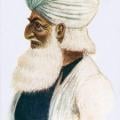
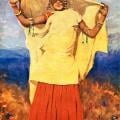
One of siz postcards in Raphael Tuck & Sons first "Native Life in India" series, which featured the work of an artist with the initials G.E.M. who remains unidentified.
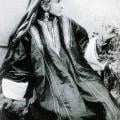
[Original caption] A Belle of Northern India. The women of Delhi and district are, to Western eyes, rather more pleasing than those of many other parts of India.
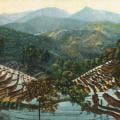
Traditional wet rice farming involves keeping the rice seeds and young plants submerged under water to keep weed infestation at bay until the young rice plants are well established.
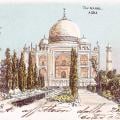
One of the earliest, if not the earliest postcard to the Taj Mahal. It can be rather firmly dated to 1899 when it was part of a series produced by the Ravi Varma Press for Babajee Sakharam, a Bombay-based retailer of photographic supplies, who…
A postcard that shows off the great detail achievable in the collotype printing process. Made from a photography from by the photographer Fred Bremner of Lahore and Quetta, the reproduced image owes its ability to reproduce the detail of the…
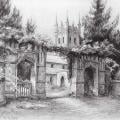
An unusual artist-signed postcard of All Saints Church in Coonoor, established in 1854. Very finely done, it is among the limited examples British amateur artist trying their hand at something often self-published on a postcard.
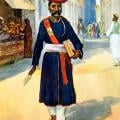
This image by the Indian painter M.V. Dhurandhar celebrates the rise of a new type of worker in early Mumbai - the peon who worked for a business owner or manager and would ultimately gather some authority by controlling access to his boss.
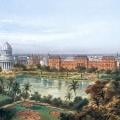
Another F. Perlberg signed postcard. Murrays A Handbook for Travellers in India Burma and Ceylon (1938) writes of this view "On the W.[est] side of Dalhousie Square is the large domed building of the General Post Office, occupying part of the site…