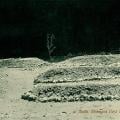
Graves of British soldiers killed in August 1908 during a British military expedition against Mohamand tribes northeast of Peshawar who had launched a surprise attack against the city on April 24, 1908, fomenting what one British general called a…
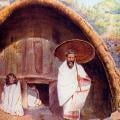
[Original caption] A Toda House _ Its Master and Mistress. A native residence of the roughest kind of architecture, thatched or wattled roof, unglazed holes for windows and a general air of crampy discomfort, but the hot season begins early in the…
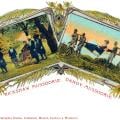
A very unusual early split-screen postcard by Julian Rust, "Art Photographer," which combines collotype images with the ornate decorative flourish of lithographic postcards.
An unusual keyhole view by Plate & Co. The top part of the front of the card could also have been used for a message. Plate's Art Card series was distinguished for its rich use of color on a slightly embossed or corrugated halftone surface.
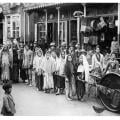
Labor-intensive road rolling helped to create smoother and less permeable roads. The early history of road rolling in Europe can be traced to the 18th century when roads became militarily important.
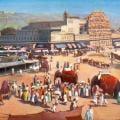
[Original caption] The Chowk and Howa Mahal. This is a picturesque and animated scene. The inhabitants of Jeypore are a busy people, and their bazaars are generally crowded.
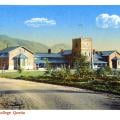
The Staff College for the British Indian army was moved here in 1907 and became the main senior training center until Partition; since then it is the Pakistan army's main educational facility.
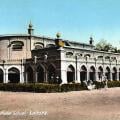
An educational institution in the heart of Lahore. Originally founded as a middle school in 1883 it was upgraded to a high school in 1891. Tthe school spreads over an area of 23,155 sq.
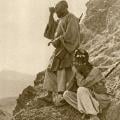
One of Holmes most popular images, with "trans-border type" referring to tribesmen who floated between Afghanistan and the Northwest Frontier Province (NWFP) border areas.
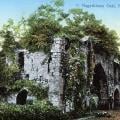
Shriniwas Mahadeo & Sons on Church Road in Belgaum (now Belagavi, Karnataka) published a number of exceptional cards of the ruins of Nagarkhana Gate. Note the red coloring on a few flowers, applied by stencil.