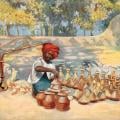
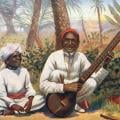
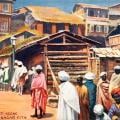
[Original caption] The Native Potter is a familiar figure in the streets of Indian towns. He places the clay on a pole, which is sunk a couple of feet in the ground, and keeping this revolving on its axis with a continuous motion of his feet, he…
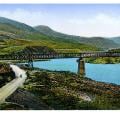
The bridge at Attock is one of the most important transportation junctions in Pakistan and connects the provinces of Punjab and Khyber Pakhtunkhwa (the former Northwest Frontier Province). Its significance dates to ancient times.
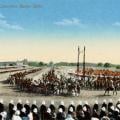
The final of the great three Darbars in Delhi - 1897, 1903 and 1911 - was also the most "postcarded" of Darbars, with numerous publishers seeking to out do each other with series illustrating the spectacle.
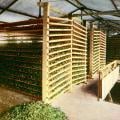
[Original caption] No. 7 - Withering: The First Manufacturing Process - The freshly plucked leaf is spread thinly on shelves of jute-hessian of wire and left to wither from 18 to 20 hours. The tea leaves are then cut to bring out the juice.
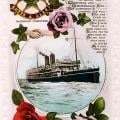
There were many kinds of "Greetings from India" postcards in the early days of postcards. This elaborate one, with an embossed border, conveying the greetings beneath a handshake, and crest of the Sherwood Foresters (Nottinghamshire and Derbyshire…
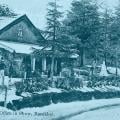
The post office, a common subject of early postcards. They celebrated the vast network that brought these simple personal objects from one part of the earth to another; the more remote the post office, like this one in the hillstation/cantonment of…
[Original caption] Srinagar is the capital of the native state of Kashmir in Northern India. Its streets are if the usual regular patterns of primitive houses of wood, light, flimsy structures with mud roofs.
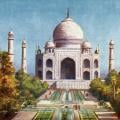
[Original] The Taj Mahal - A dream of Oriental spendour, fashioned as the last resting place for the "Exalted One of the Palace," the wife of Shah Jehan. "If there is heaven on earth it is this, it is this." [end]
The British Empire Exhibition in 1924 at Wembley, North London was held to commemorate Empire trade; Charles E. Flower was one of Tuck's most prominent postcard artists.